Porto-North-Portugal.com
The best independent guide to Porto
Porto-North-Portugal.com
The best independent guide to Porto
Porto trams: a tourism guide to the historic trams of Porto
A ride on one of Porto's historic trams, known locally as the Eléctrico, is one of the most charming experiences the city has to offer. These beautifully preserved carriages, with their polished wood interiors and gleaming brass controls, are not museum pieces; they rattle and screech along cobbled streets, offering a journey back in time.
The city was once served by an extensive tram network, but most of the lines were removed in the 1960s and 70s. Today, just three routes remain, operating as a heritage network primarily for visitors and enthusiasts. It is important to note that the trams are a distinct tourist attraction and are not integrated into Porto’s main public transport system.
Of the three remaining lines, the Linha 1 is by far the most famous and scenic, following the banks of the Douro River out to the coastal Foz district. The other two lines, Linha 18 and Linha 22, explore the historic districts around the city centre and are also worthwhile journeys.
This guide will provide a detailed overview of Porto’s historic tram network, with information on each of the three routes, current fares, and practical tips for your ride.
Related articles: Introduction to Porto - Top 10 Porto - Walking tour of Porto
Note: The historic Linha 18 tram service is currently suspended due to metro line construction works in Porto
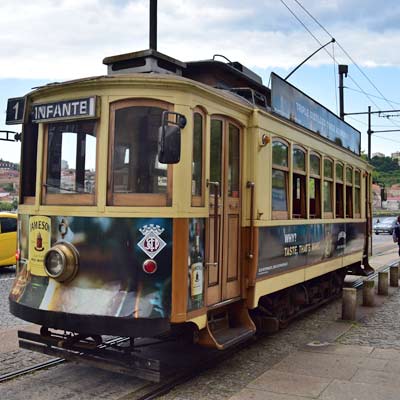
The traditional Linha 1 tram
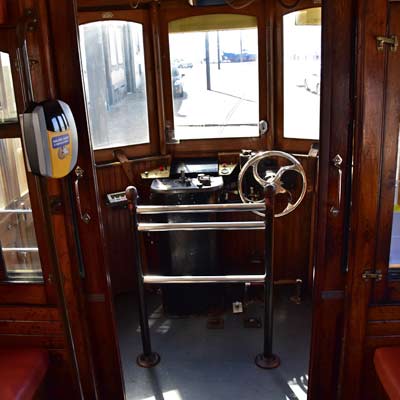
The 1930s wooden interior
Porto Tram Lines
Below is an interactive map of the three tram lines in Porto (Linha 1, Linha 18 and Linha 22)
Please note that while three tram lines are shown on the map, only Linha 1 and Linha 22 are currently operating. The Linha 18 service has been temporarily suspended to accommodate metro construction works.
Tram Fares
A single ride on the tram costs €6.00 and a return (or two journeys within 1 day) costs €8.00. There is a two-day unlimited tram pass for €12 (or €6 for a child ticket); this ticket only covers the historic trams and does not include any of the other public transport in Porto.
The two-day pass is rarely worth the price as there are only three tram lines, and a return trip to the Foz district along the Linha 1 only requires a return (€8.00). The Linha 1 tram is a more expensive way to travel to the Foz district than taking the 500 bus route (tram €6.00, bus €2.50 on-board price), but the tram journey is always more enjoyable.
Tram Linha 1
The Linha 1 tram departs from Infante and extends to the Passeio Alegre Park in the Foz district. This is a wonderful route, as the tram trundles along the banks of the Douro River and passes beneath the Ponte da Arrábida bridge.
Being the most popular tram line, it can get very busy during the middle of the day and a significant number of passengers are forced to stand. To experience the magic of the Linha 1, try to ride the tram early or late in the day when it is much quieter.
Along the Linha 1, there is a departure every 20 minutes at peak times, and the latest timetable is clearly displayed at each tram stop. Porto’s trams are operated by Sociedade de Transportes Colectivos do Porto (STCP) and the timetables can be seen on their website:
https://stcp.pt/pt/viajar/linhas/?linha=1&sentido=0&t=horarios
(link opens in a new tab)
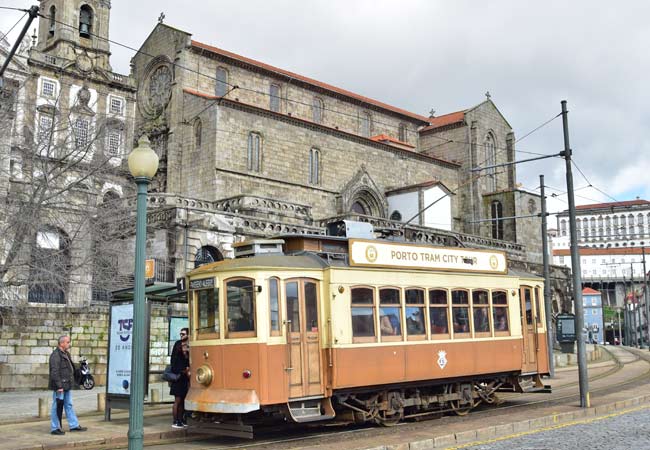
The Linha 1 tram waiting outside the Igreja de São Francisco
The entire Linha 1 tram route is covered by the 500 bus route (Praça da Liberdade to Matosinhos, €2.50 single). If there are long queues for the tram, catch the bus instead. The Linha 1 tram is the only route which does not perform a loop, therefore a trip to the Foz district requires two tram tickets, costing a total of €12 (or €8.00 with a return ticket).
The Foz district is one of the most charming regions of Porto, but because it does not contain any major tourist attractions, it is sadly often overlooked. Before catching the tram back to central Porto, take a wander along the riverfront past the São João fort to the delightful seafront of Foz.
Related articles: Linha 1 route and tourist guide
Tram Linha 22
The Linha 22 departs from Batalha and performs a one-directional loop of central Porto. The tram route connects to the Linha 18 at the Carmo stop, and here is where the majority of passengers board the tram.
If this is your first visit to Porto, this is the best tram line to begin with, as it forms a complete loop and travels through the more interesting sections of the city.
Another advantage of this tram route is that it passes the beautiful Santo Ildefonso church, which can be seen without having to climb the steep hill from the São Bento train station.
The entire Linha 22 route takes around 30 minutes, although this is often impacted by traffic or badly parked cars.
The timetable for the Linha 22 tram can be seen on the STCP website:
https://stcp.pt/pt/viajar/linhas/?linha=22&sentido=0&t=horarios
(link opens in a new tab)
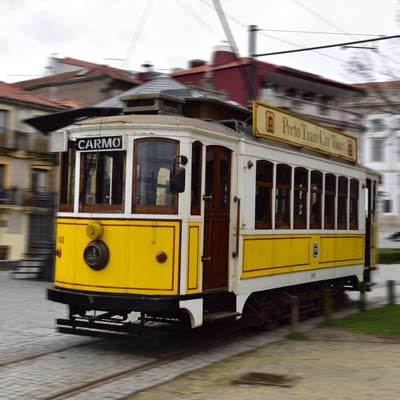
The Carmo tram speeding through Porto
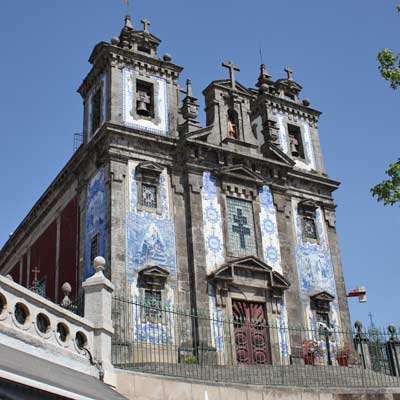
The stunning Igreja Santo Ildefonso church
Porto tram Linha 18
The Linha 18 tram route is not currently in service due to ongoing metro construction in Porto. This suspension affects the entire route from Museu do Carro Elétrico to Carmo. Visitors interested in experiencing Porto's historic trams can still enjoy Linha 1 along the riverside or Linha 22 through the historic centre.
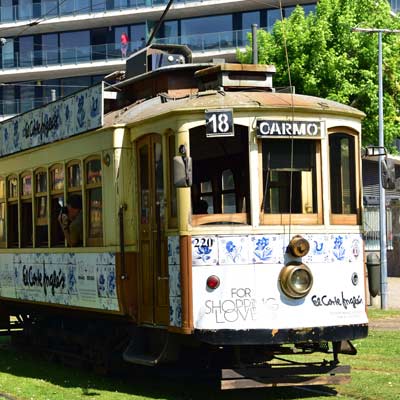
The Linha 18 tram on its way to Carmo
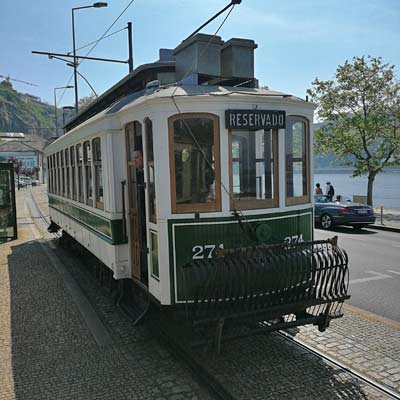
The tourist tram at the Museu do Carro Elétrico
Timetables
During working hours there is a tram departure every 20 minutes on Linha 1 or every 30 minutes on Linha 18 and 22. At each of the tram stops a current timetable is displayed. The Porto trams are operated by Sociedade de Transportes Colectivos do Porto (STCP) and the latest timetables can be seen on their website:
www.stcp.pt
(link opens in a new tab)
The enjoyment of the tram is having a seat and viewing the city from the ancient vehicle; this is no fun if you are forced to stand. More important than the timetables is your position in the queue; if there are more than 15 people in front of you, wait for the next one or come back later for a ride.
Our most popular guides to Porto


Expert Insight: I'm Philip Giddings. I've been visiting Portugal since 2001 and now live here, in the Graça district of Lisbon, with my Portuguese wife Carla, whose family go back generations. Carla first brought me to Porto on an early trip, proud to show me her country, and 25 years on we still travel north almost every month to see her aunt and extended family, who live in the city.
I've been writing the independent guides at Porto-North-Portugal.com since 2010, and the site is now my full-time work. Living in Portugal, married into a Portuguese family, and walking Porto every month gives me a first-hand insight that many foreign blog writers simply don't have.
The site now has 174 guides on Porto and northern Portugal. It takes no payment from tourist boards, tour operators, or attractions for inclusion, and is funded by affiliate commissions on tour bookings, which are disclosed on every page that contains them. Every practical detail (ticket prices, opening hours, bus routes, time-slot policies) is checked against official sources and verified in person on the walks I make through the city. Read my full story here.