Porto-North-Portugal.com
The best independent guide to Porto
Porto-North-Portugal.com
The best independent guide to Porto
The Best Day Trips from Porto: An Independent Guide for 2026
Few European cities hold you for as long as Porto. The reason lies as much beyond the city as within it. In under an hour by train you can stand in the courtyard where the first king of Portugal was born, climb a Baroque stairway said to mirror the ascent into heaven, glide through a network of canals in a painted gondola, or watch the Douro slip past terraced vineyards that have produced Port wine for three centuries. All of it is within easy reach, and most of it for less than the price of lunch.
What surprises most first-time visitors is the sheer range. To the east, the Douro Valley unfolds into what I would argue is the most beautiful wine region in Europe. To the north sit Guimarães and Braga, the country's historic and spiritual heartland. To the west lies the Costa Verde, with its striped fishermen's cottages at Costa Nova and the long golden beaches of Vila do Conde. South of the city lie Aveiro and its canals, and beyond them the university town of Coimbra. The trick is not finding somewhere worth visiting, but choosing which trips to fit into the time you have.
For most of these trips you will not need a car. Porto's regional rail and metro network is one of the best in the country, and most of the destinations in this guide can be reached by a direct train, often in around an hour and for a few euros. Where a car truly opens up the region, such as the back roads of the Douro or the upper Minho, I will say so plainly. Where it does not, I will steer you towards the easier and cheaper option.
I have been exploring Portugal since 2001, and my Portuguese wife has family in and around Porto, so the city has been our second home for the better part of twenty-five years. In that time we have made these day trips in every season and at every pace, and have shown them to a long list of friends who have asked us where to go first. This guide passes on what we have learned, so you can choose the trips that best suit your own week in the north and avoid the ones that are not worth the journey.
My favourite day trips from Porto
The choice can feel overwhelming when every guidebook seems to push a different town, so the summary below is how I would describe each destination to a friend asking where to go first. I have grouped them by how most visitors actually use them: the popular trips that earn their reputation, and a handful of quieter alternatives worth knowing about if you have the time or want to step away from the crowds.
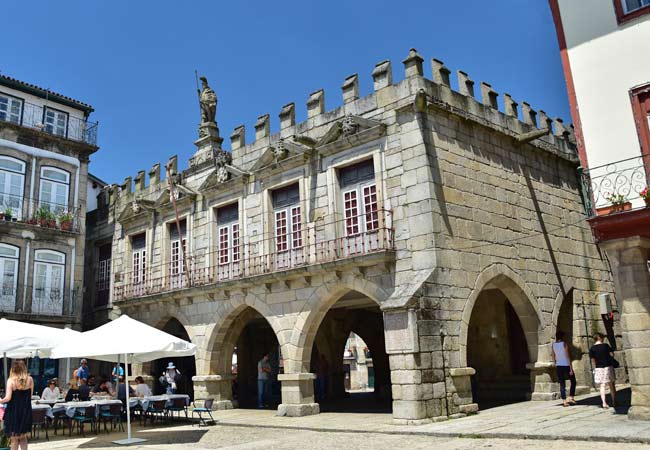
Guimarães:
The Portuguese call this the cradle of their nation, and they are not exaggerating. The first king of Portugal was born here in 1109, and the medieval centre has changed remarkably little in the eight hundred years since. You will find a sombre Gothic palace, a hilltop castle, and a tangle of granite streets that leads naturally from one to the other. Three hours covers the headline sights at an unhurried pace. A direct train from Porto takes around an hour - Guide to Guimarães
Braga:
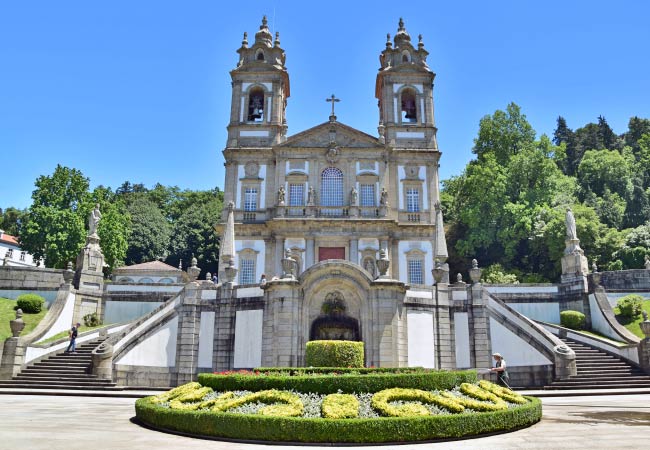
Portugal's religious capital for the better part of two thousand years, Braga is home to the oldest cathedral in the country and a skyline shaped by church towers. Most visitors pair the historic centre with a trip up to Bom Jesus do Monte, the Baroque pilgrimage church reached by a monumental zigzagging staircase. Do not miss it. Allow four to five hours to do both properly. The train from Porto takes a little over an hour - Guide to Braga
Aveiro:
Aveiro is often called the Venice of Portugal, which oversells it slightly, though the comparison is not without merit. The town is laced with canals plied by colourful moliceiro boats, originally used to harvest seaweed and now repurposed for short tours. Aveiro itself takes only a couple of hours to see, which is why I would always pair it with Costa Nova, eight kilometres to the west, where the striped fishermen's cottages along the seafront have become one of the most photographed scenes in the country. A direct train from Porto runs in around an hour - guide to Aveiro

The Douro Valley:
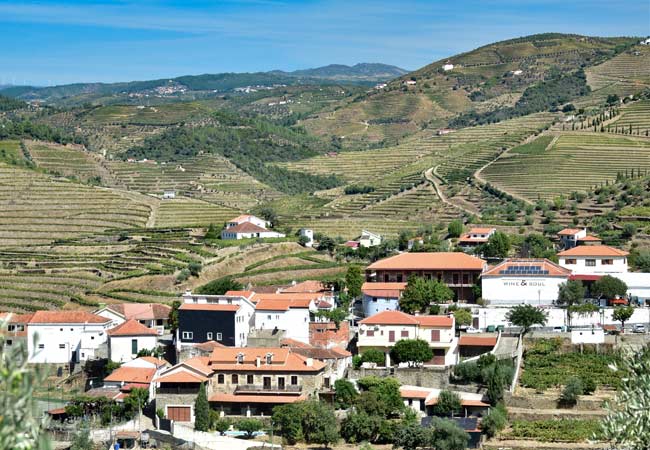
To my mind the most beautiful wine region in Europe, and the source of every drop of Port wine in the world. Terraced vineyards fall steeply to the slow-moving river, and the small towns of Pinhão and Peso da Régua serve as the main bases for visitors. The valley lies a hundred kilometres east of Porto and you have three sensible ways to see it: a full-day river cruise, the Linha do Douro railway (one of the most scenic train rides in Europe), or a drive along the N222. Each gives you a different angle on the same landscape, and choosing between them is one of the more enjoyable decisions you will make on this trip, guide to The Douro Valley.
Lamego:
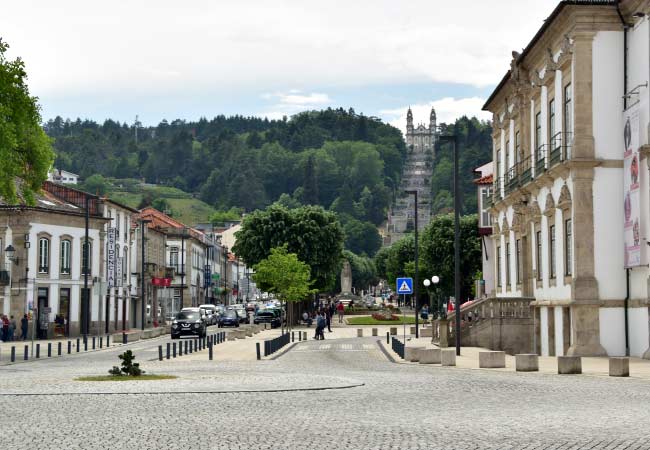
A quieter alternative to Braga, and in some ways the more interesting one. The Santuário de Nossa Senhora dos Remédios sits at the top of a Baroque stairway every bit as grand as the one at Bom Jesus, but Lamego receives a fraction of the visitors. The pleasure here is in the slower pace and the sense of being in a working Portuguese town that has not bent itself out of shape for tourism. A car helps, as it lets you fold in the Mosteiro de São João de Tarouca and the medieval village of Ucanha along the way, guide to Lamego.
Matosinhos:
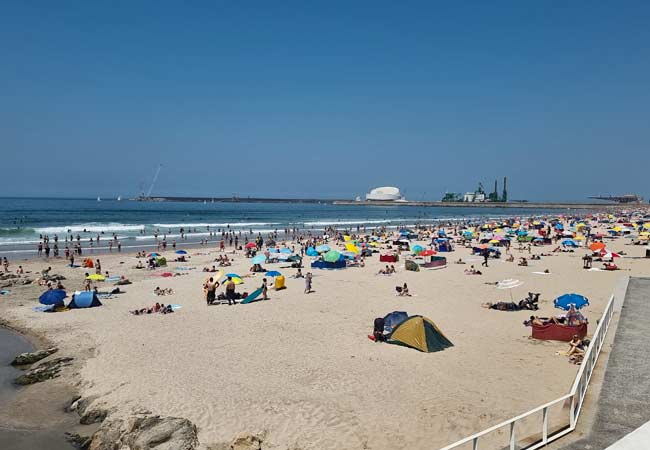
The closest proper beach to Porto, reachable on the metro in around half an hour. The town itself is functional rather than charming, sitting beside a working port and the cruise terminal, but the sand is wide, the water is clean, and the seafood restaurants along Rua Heróis de França grill some of the best fish in the north. Go for the beach and the lunch, not for the setting, guide to Matosinhos.
Other day trips worth knowing about
The trips above will fill most week-long itineraries, but there are several quieter destinations I would point you towards if you have longer or want to step beyond the well-trodden circuit.
Viana do Castelo is the city most foreign visitors miss, and is all the better for it. Set on the wide Lima estuary, it has a magnificent hilltop sanctuary, a handsome historic centre, and the unforced Portuguese feel that the more popular destinations have started to lose.
Ponte de Lima is one of the oldest villages in Portugal, sitting on the river of the same name and crossed by a Roman bridge that still carries pedestrians today. It is small, slow and lovely, and best reached by car.
Coimbra is the country's ancient university city, with one of the oldest universities in the world and students still wearing the traditional black gowns. It sits at the very edge of day-trip range from Porto, however. I would strongly recommend an overnight stay rather than rushing it in a single day, or visiting it as a stop on your way south to Lisbon.
Vila do Conde is a small fishing town twenty minutes north of Porto by metro, where a hilltop monastery looks down over a working harbour and three kilometres of golden sand. It is the best choice if you want a beach day with a proper town attached.
Póvoa de Varzim is a Portuguese beach resort rather than a tourist one, popular with families from across the north in summer. The beaches are excellent, the town itself less so, and it works best if you are travelling with children and want a straightforward day by the sea.
Is it worth joining an organised tour?
For visitors short on time, an organised tour is often the easiest way to see the region. Someone else handles the driving and the timetables, and a good guide will take you to places you would walk past on your own.
The Douro Valley in particular opens up far more easily with a guide than without. Tours are also worth considering for combined days like Guimarães and Braga, which are hard to do well on public transport in a single day.
Over the past few years I have worked with GetYourGuide, and the tours listed below are the ones I would book myself.
To help you picture your options, the map below pinpoints each destination. The most popular day trips are marked in yellow, and my favourite quieter alternatives in green.
Popular day trips: 1) Braga 2) Guimarães 3) Douro Valley 4) Aveiro 5) Matosinhos 6) Coimbra
Quieter alternatives: 7) Lamego 8) Vila do Conde 9) Viana do Castelo 10) Ponte de Lima 11) Espinho 12) Barcelos 13) Póvoa de Varzim
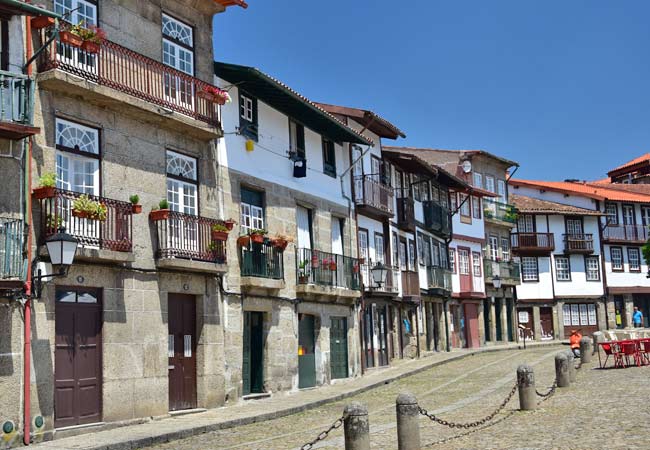
Guimarães is the oldest city in Portugal, and in my view the finest day trip from Porto.
My suggested order for day trips from Porto
Once you have a sense of what each destination offers, the next question is the order to do them in. The order below is the one we use ourselves, and the one we recommend to friends and family:
1) Guimarães 2) Braga 3) Douro Valley 4) Aveiro 5) Viana do Castelo 6) Lamego
The first four are direct trains of around an hour. Viana do Castelo and Lamego take longer to reach but are well worth the extra effort. If you only have time for the first three, you will still have seen the best of the north. One piece of advice before you start: give Porto itself at least two days before heading out. The city is worth it.
Related articles: 2 days in Porto
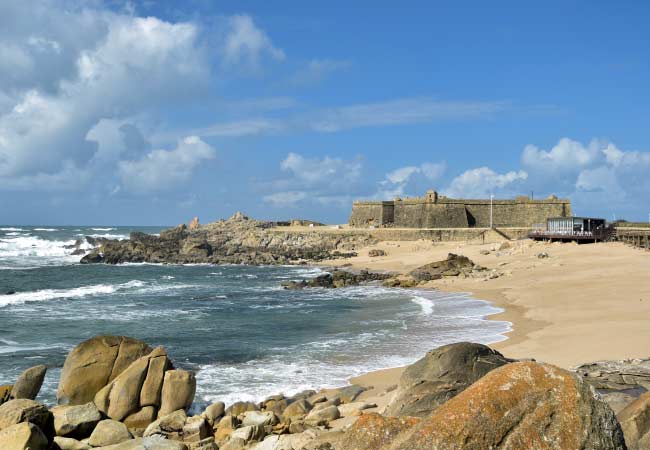
Vila do Conde pairs a handsome old town with three kilometres of golden sand.
Coimbra and Viana do Castelo: better as overnight stays
Both Coimbra and Viana do Castelo can be reached from Porto in around an hour and a quarter, and on paper they look like reasonable day trips. In practice, I would urge you to give each of them a night.
The journey time is not really the issue. Both towns simply have more in them than a few hours allows. Coimbra is a full university city, with a hilltop library, a riverside old town, and a fado tradition best heard after dark. Trying to take it all in between trains turns the visit into a march. Viana do Castelo is the opposite kind of place, slow and unhurried, set on the wide Lima estuary and watched over by the Santuário de Santa Luzia. It is the sort of town that opens up over an evening rather than an afternoon, and remains almost unknown to foreign visitors. If you want to step away from the tourist circuit for a night, this is where I would send you.
If a single day is all you can spare, take the first train out and the last one back, and accept that you will be picking two or three sights rather than seeing everything.
Related articles: Viana do Castelo - Coimbra guide
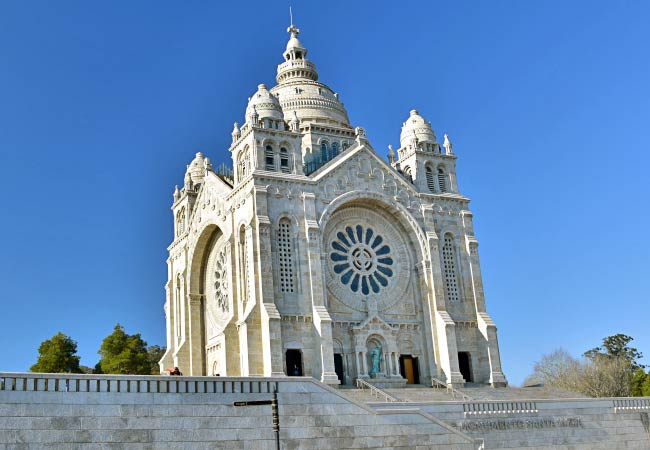
Santuário de Santa Luzia in Viana do Castelo
Day trips with a rental car: my suggested order
A rental car opens up corners of the north that the train will never quite reach, and lets you fold several places into a single day. With a car, this is the order I would suggest:
1) Guimarães 2) Braga 3) Douro Valley and Lamego 4) Viana do Castelo 5) Aveiro and Costa Nova 6) Ponte de Lima and Ponte da Barca 7) the upper Minho (Monção, Valença and Cerveira)
The car version trades a few of the easier rail trips for the harder-to-reach parts of the region, particularly the upper Minho, which is almost impossible to see properly any other way.
One practical note from years of doing this. A car is more hindrance than help inside Porto, Braga and Guimarães, where the historic centres were never built for them and the parking is expensive when you can find it at all. Hire one only for the days you need it.
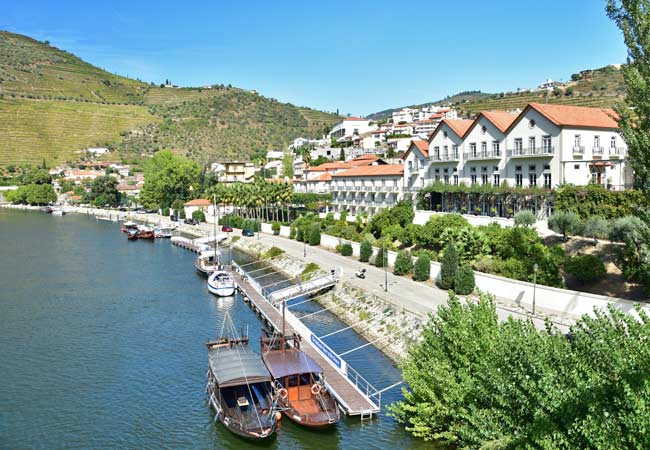
The pretty town of Pinhão sitting on the Douro
Beach focused day trips
The coast either side of Porto is lined with wide Atlantic beaches, and most of them sit at the end of a short train or metro ride. The four I would point you towards are Vila do Conde, Miramar, Espinho, and Póvoa de Varzim. Each pairs a proper stretch of sand with a town that is worth a wander once you have had your fill of the sea.
Matosinhos is the beach most visitors hear about first, and it is worth being honest about it. The sand is wide, the water is clean, and the seafood lunch afterwards is among the best in the north. The setting, however, lets it down. The beach sits in the shadow of a working port and the cruise terminal, and the views are industrial rather than scenic. Go for the swim and the lunch, but do not expect the postcard.
Related articles: Porto beach guide
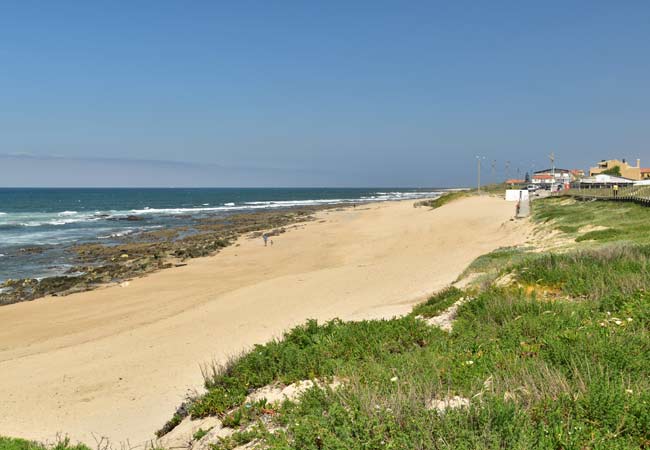
Praia de Miramar
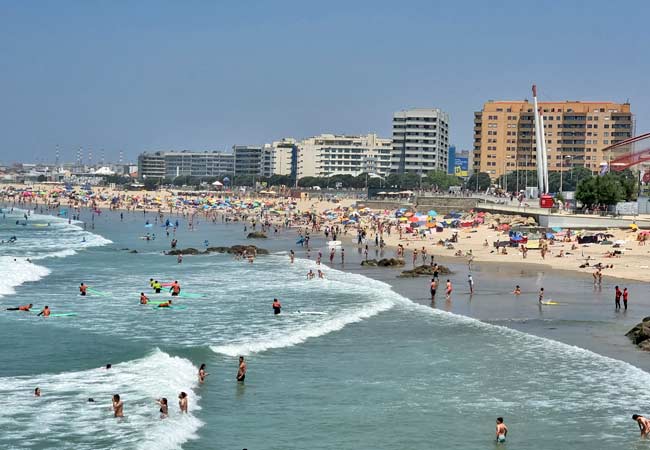
Matosinhos
The day trips in detail
The summary above is enough to choose between them. What follows takes each destination in turn, with more on what to see, how long to allow, and the easiest way to get there.
Day trip to Guimarães
The Portuguese have a saying: Portugal nasceu aqui. Portugal was born here. It is not sentiment. The first king of the country, Afonso Henriques, was born within these walls in 1109, and the early kingdom was ruled from the castle that still stands at the northern edge of the old town. Few cities in Europe wear the title of national birthplace quite as comfortably as Guimarães does.
The headline sights cluster together at the top of the historic centre. The castle is compact, and feels every bit its age. A short walk away sits the Paço dos Duques de Bragança, a sombre medieval palace built in the fifteenth century by the most powerful noble family in the country. Below them, the old town opens out into a sequence of granite plazas and arcaded streets that have changed remarkably little in six hundred years, and which earned Guimarães its UNESCO World Heritage listing in 2001.
Once you have seen the castle and the centre, I would take the cable car up Monte da Penha. The ride climbs four hundred metres above the town in a few minutes, and the views back over the rooftops and out across the Minho are the best you will get of the region. There are easy walking trails at the top if you want to stretch the visit, or a small chapel and café if you do not.
A direct train from Porto runs in around an hour, and a half-day in the town is enough for an unhurried visit. If you are choosing only one day trip from this list, this is the one I would pick.
Related articles: Guimarães Introduction - Porto to Guimarães - Guimarães day trip guide
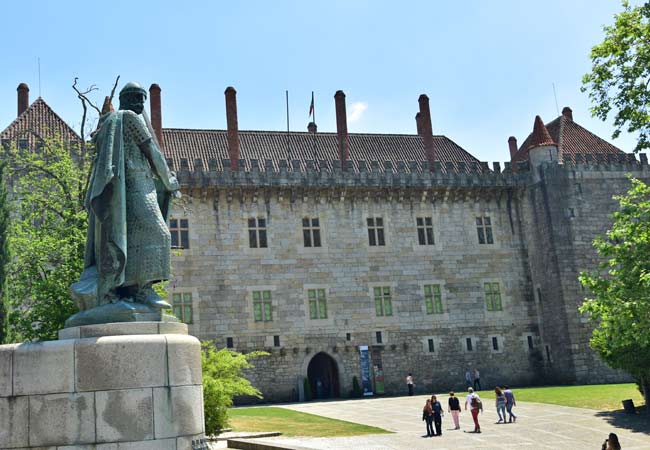
The sombre Duques de Bragança palace dates from the 15th century
Day trip to Braga
Two thousand years of religious tradition have shaped this city. The result is a place where churches outnumber almost any other kind of monument, and where the oldest cathedral in Portugal still stands at the heart of the historic centre.
The Sé de Braga is the obvious place to start. Founded in the eleventh century on the site of an even older church, it is a layered building that has been reshaped by every architectural style to pass through Portugal, from Romanesque to Gothic to Baroque. Around it, the historic centre unfolds into a network of pedestrian streets, leafy plazas, and grand civic buildings that deserve an unhurried morning of wandering. Despite the religious focus, this is also one of the youngest cities in the country thanks to its university, and the cafés and bars give it an energy that the cathedral count would not lead you to expect.
The other reason most visitors come to Braga is Bom Jesus do Monte, a few kilometres outside the city. The Baroque pilgrimage staircase climbs the wooded hillside in a series of zigzagging flights, each one decorated with chapels, fountains, and allegorical statues representing the senses and the virtues. The whole structure is said to symbolise the soul's ascent towards heaven, and each flight is dedicated to a different stage of that journey. It is one of the most photographed monuments in the country, and rightly so. You can climb the steps on foot in around twenty minutes, or take the water-powered funicular that has been carrying pilgrims to the top since 1882.
Allow four to five hours to see Braga and Bom Jesus together at a comfortable pace. The direct train from Porto runs in a little over an hour, which makes this one of the easier day trips on the list.
Related articles: Braga introduction - Day trip to Braga
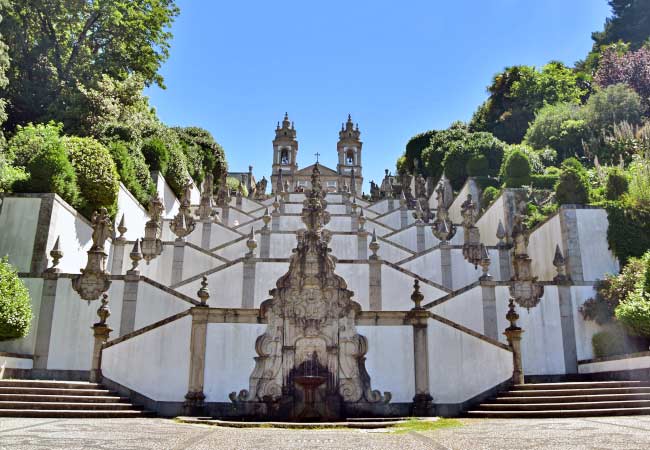
The third flight of steps to the summit of Bom Jesus do Monte Church
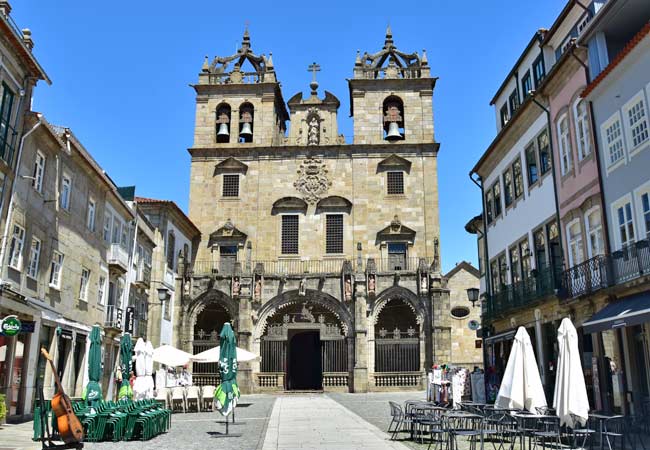
The Sé de Braga
Day trip to the Douro Valley
The Douro is the oldest demarcated wine region in the world, established by royal decree in 1756, almost a century before Bordeaux managed the same. Every drop of Port wine ever produced has come from these terraced hillsides, and the landscape you see today, with its dry stone walls and hand-cut terraces falling steeply to the river, has been shaped over three centuries by the trade. UNESCO listed the valley as a World Heritage Site in 2001, recognising the cultural landscape rather than the wine itself.
The two main towns, Pinhão and Peso da Régua, sit on the banks of the river and serve as the bases for most visitors. Régua is the larger of the two and home to the Museu do Douro, which is the best place to start if you want to understand how the Port trade actually works. Pinhão is the smaller and prettier, set deep in the valley where the vineyards close in tightest on the river, and its tiled railway station, decorated with azulejos showing the wine harvest, is one of the most photographed in the country.
There are three ways to see the valley properly, and choosing between them is half the pleasure of the trip. The Linha do Douro railway runs from Porto to Pocinho, and the stretch east of Régua is regarded as one of the most scenic train journeys in Europe. The N222 road shadows the river through the same landscape and was once voted the best driving road in the world, which gives you the freedom to stop at quintas and viewpoints whenever the view demands it. River cruises set off from Porto and Régua and offer the slowest and most relaxed view of the same scenery, usually with lunch and a tasting included.
If you are coming for a single day, I would take the early train to Régua, transfer onto a short river cruise to Pinhão, and return by rail in the late afternoon. It gives you the train and the river in a single day, which is most of what makes the Douro the Douro.
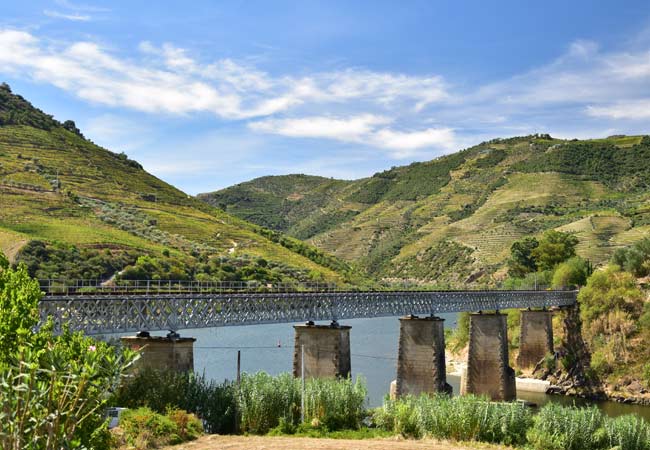
The Linha do Douro railway as it follows the river upstream
Day trip to Aveiro and Costa Nova
Aveiro is often called the Venice of Portugal, which is the kind of comparison that usually oversells a town. In this case it earns it, at least in part. The historic centre sits on the edge of a wide coastal lagoon and is laced with canals, and the boats that ply them, the colourful flat-bottomed moliceiros, do bear a passing resemblance to gondolas. They were originally working boats used to harvest seaweed for fertiliser, and have been repurposed for short tours of the town's main waterways.
The other reason Aveiro is worth the journey is its Art Nouveau architecture. The early twentieth century brought wealth from the salt and seaweed trades, and a generation of merchants spent it on ornate tiled façades and curving ironwork that have aged remarkably well. A short walking circuit takes in the best of them, alongside the fish market and the pretty old fishing quarter of Beira-Mar. A morning is enough to see the centre at a comfortable pace.
That is why I always pair Aveiro with Costa Nova, eight kilometres west on the coast. This small fishing village is famous for its candy-striped wooden cottages, the palheiros. Originally built by fishermen as storage for nets and boats, they are now painted in bands of red, blue, yellow and green, and line the seafront in one of the most photographed scenes in the country. The village itself is small enough to walk in twenty minutes, but a long lunch of grilled fish at one of the seafront restaurants is one of those small Portuguese pleasures that justifies the trip on its own.
Aveiro is connected to Porto by a direct train in around an hour. Buses run from Aveiro to Costa Nova every half hour and take fifteen minutes, but they stop a few times along the way, so I usually call an Uber for the sake of fifteen minutes.
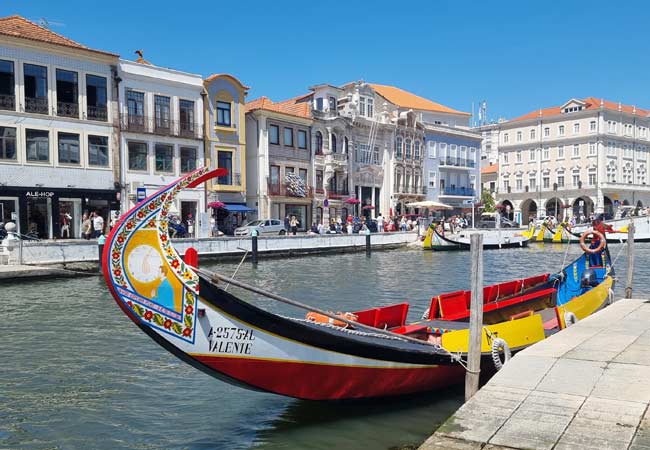
The Moliceiros boats of Aveiro
Day trip to Lamego
If Braga has the most famous Baroque staircase in Portugal, Lamego has the one most visitors miss. The Santuário de Nossa Senhora dos Remédios sits high above the town and is reached by a zigzagging stairway of nearly seven hundred steps, decorated with chapels, tiled panels, and stone fountains, and culminating in a twin-towered church that has drawn pilgrims for the better part of three centuries. It is the equal of Bom Jesus do Monte in every meaningful way, and you will share it with a fraction of the crowd.
The town below repays the descent. A grand avenue runs the length of the historic centre, lined with cafés and small shops, and ends at the ancient castle that has watched over Lamego since the twelfth century. Between the two are quiet plazas, a handsome cathedral, and the kind of unhurried small-town atmosphere that the more popular Douro stops have started to lose.
If you have a car, I would extend the day with two short drives. The Mosteiro de São João de Tarouca, twenty minutes south, is the oldest Cistercian monastery in the country, founded in 1152 and now a romantic ruin set in wooded countryside. A little further on lies Ucanha, a small village whose medieval bridge and fortified tower give it one of the prettiest entrances of any village in the region.
Lamego pairs naturally with Peso da Régua, twelve kilometres to the north on the river and the departure point for most of the Douro cruises. By public transport you would take the Linha do Douro train from Porto to Régua, then a connecting bus up to Lamego. With a car the two are an easy combination, and together they make one of the more interesting days you can have in the Douro.
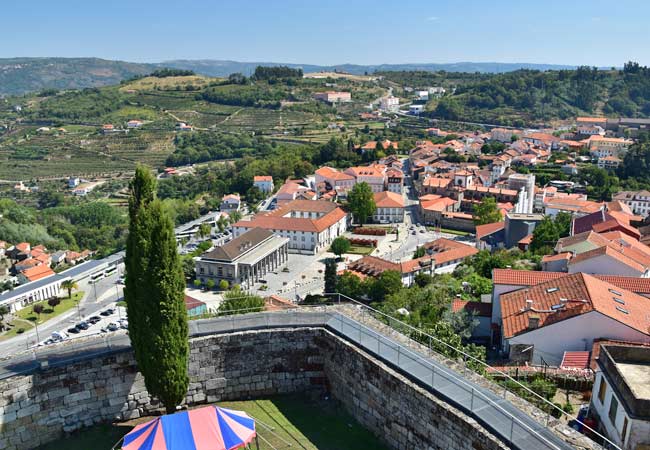
The historic centre of Lamego as seen from the Castelo de Lamego
Day trip to Vila do Conde
Vila do Conde is the rare beach town that has not let the beach take over. The historic centre is still a working fishing port, the monastery on the hill still watches over the river mouth as it has done for seven hundred years, and the three kilometres of golden sand stretching north towards Póvoa de Varzim are almost an afterthought. Almost.
The skyline belongs to the Mosteiro de Santa Clara, founded in 1318 and the largest monastery in northern Portugal at its height. Behind it runs the most striking sight in the town, the great stone aqueduct that once carried water to the monastery from five kilometres away, and which still stretches for nearly a thousand metres on hundreds of granite arches. Down in the historic centre you will find the Gothic Igreja Matriz, a small grid of cobbled streets, and the harbour front where the Nau Quinhentista is moored, a full-size replica of a sixteenth-century Portuguese sailing ship that you can climb aboard for a few euros.
The beach itself is wide and easy. The main stretch runs north of the river and is lined with a long promenade and a handful of restaurants, while the quieter Praia da Azurara on the southern bank is backed by protected dunes and feels more natural. Both have soft golden sand and the bracing Atlantic water that the north of Portugal is known for.
Póvoa de Varzim sits at the northern end of the same beach. The sand is arguably better and the resort is busier, but Póvoa is a modern beach resort rather than a historic town. If you are choosing between them, Vila do Conde is the better day out. Both are stops on the same metro line from Porto, around forty minutes from the city centre.
Related articles: Vila do Conde - Póvoa de Varzim
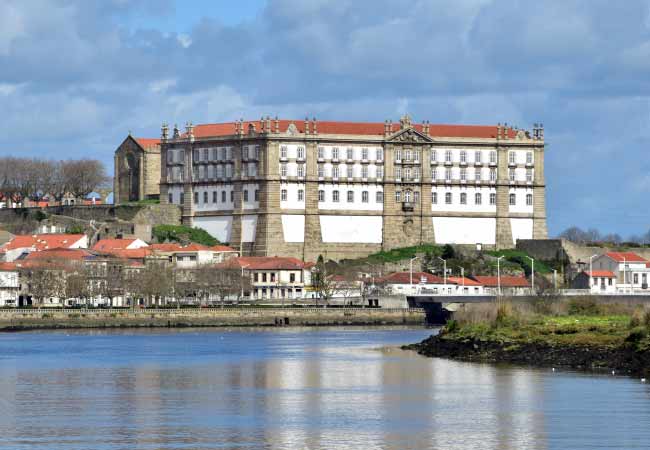
The Mosteiro de Santa Clara, as seen from the Ave River
Coimbra
Coimbra is the ancient university home of Portugal and is a city that is steeped in history and traditions. The university students, dressed in their customary black gowns, can be seen throughout the city.
On a map, Coimbra may appear too distant for a day trip from Porto but it is connected to the express rail service, the Alfa Pendular, which makes the journey in less than an hour.
These train tickets must be pre-booked. It is also viable to include Coimbra as a day trip option when travelling between Porto and Lisbon.
Related articles: Coimbra guide
Our most popular guides to Porto


Expert Insight: I'm Philip Giddings. I've been visiting Portugal since 2001 and now live here, in the Graça district of Lisbon, with my Portuguese wife Carla, whose family go back generations. Carla first brought me to Porto on an early trip, proud to show me her country, and 25 years on we still travel north almost every month to see her aunt and extended family, who live in the city.
I've been writing the independent guides at Porto-North-Portugal.com since 2010, and the site is now my full-time work. Living in Portugal, married into a Portuguese family, and walking Porto every month gives me a first-hand insight that many foreign blog writers simply don't have.
The site now has 174 guides on Porto and northern Portugal. It takes no payment from tourist boards, tour operators, or attractions for inclusion, and is funded by affiliate commissions on tour bookings, which are disclosed on every page that contains them. Every practical detail (ticket prices, opening hours, bus routes, time-slot policies) is checked against official sources and verified in person on the walks I make through the city. Read my full story here.