Porto-North-Portugal.com
The best independent guide to Porto
Porto-North-Portugal.com
The best independent guide to Porto
Foz do Douro, Porto: an independent travel guide for 2026
Where the Douro finally meets the Atlantic, Porto changes its mind about itself. The granite tenements and tiled façades of the centre give way to wide skies, salt air, and a coastline of small sandy coves broken by dark outcrops of rock. This is Foz do Douro, the city's most affluent district, and the place Porto comes to breathe out.
Foz has two quite distinct sides, and I would encourage you to make time for both. The Atlantic edge is wild and theatrical, a string of small beaches where waves roll in with real force, backed by the fashionable Avenida do Brasil and its line of stylish restaurants and bars. The southern edge, where the river runs its final stretch to the sea, is altogether gentler, a place of shaded gardens, riverside promenades, and benches where Porto's residents come to sit with the newspaper. Standing guard between the two is the Fortaleza de São João da Foz, a 16th-century fort that has watched over the river mouth for nearly four hundred years. I never quite tire of the walk out to the Felgueiras lighthouse at the tip of the long sea wall, except when the Atlantic is in a temper.
What I love most about Foz is that few visitors find their way out here. Most stay in the Ribeira and the port lodges of Gaia, which means you will have the Pérgola at sunset, the cobbled lanes of Foz Velha, and the long walk along the river largely to yourself. My favourite way to arrive is on the historic Linha 1 tram, which trundles slowly along the riverbank from the São Francisco church and deposits you at the Passeio Alegre garden in something close to a different city.
I have been writing about Portugal since 2001, and with my Portuguese wife's family living nearby, Porto has been our second home for twenty-five years. This guide shares what we have learned, so you can plan an afternoon, or a full day, that takes in the best of the district and the coastline either side of it.
Highlights of Foz do Douro
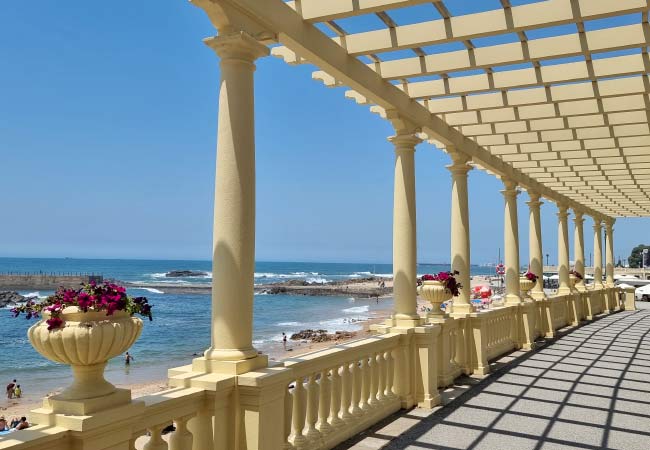
The Pérgola da Foz - A 1930s Neoclassical-inspired pergola that extends along the Praia do Molhe beach - and is the most romantic location in Porto from which to watch the sunset.
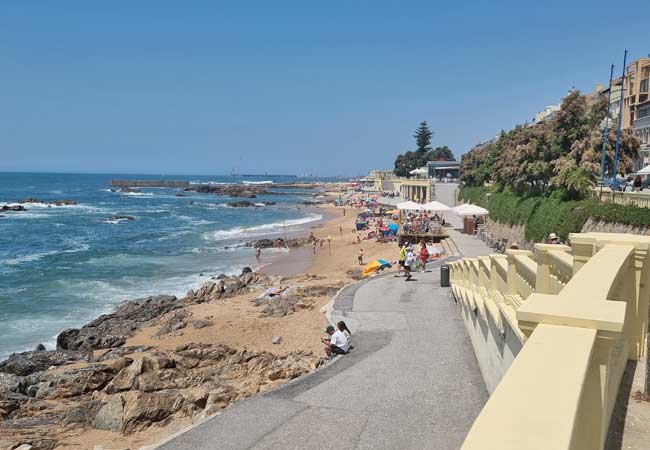
The beaches of Foz - The picturesque sandy beaches that line the coastline of Foz, perfect for a hot summer’s day. The best beaches are the Praia do Carneiro, the Praia dos Ingleses and Praia de Gondarém.
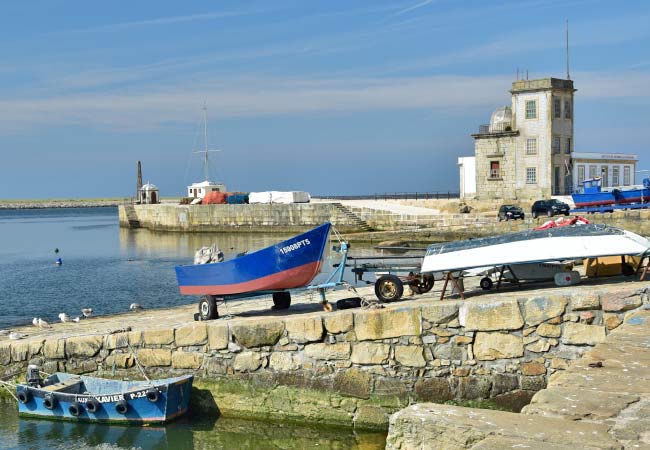
Promenade Foz do Douro - The scenic foot and cycle path that extends along the banks of the Douro River. The route passes parks, gardens and small fishing harbours, ending at the Barra do Douro seawall. This is one of the best walks in Porto.
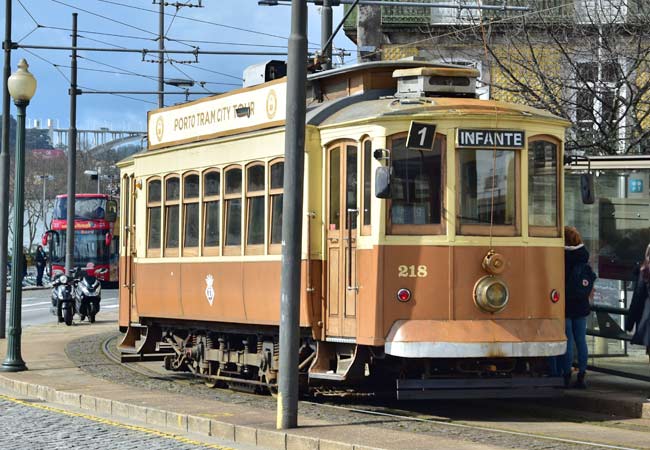
Linha 1 tram - The historic tram that connects central Porto with Foz do Douro. The delightful tram slowly trundles along the banks of the Douro and terminates at the Passeio Alegre garden in Foz.
Insight: The district is known as Foz do Douro, but its residents simply refer to it as Foz.
A trip to Foz do Douro
Foz do Douro is an ideal choice for your second or third day of sightseeing in Porto. The district doesn’t have any major stand-out tourist attractions; it is more of an area to explore slowly and embrace the peaceful and authentic Portuguese atmosphere.
The real attractions of Foz are the two pleasant promenades: the Promenade Foz do Douro along the riverside and the beachside promenade to the Castelo do Queijo.
A visit to Foz could range from a couple of hours to a full day, with a full day including the beach town of Matosinhos, 3km north of Foz. A guide to Matosinhos can be found here.
There are many excellent restaurants along the Avenida do Brasil, with the Restaurante Praia da Luz - overlooking Luz beach - being highly recommended.
It is very easy to travel to Foz, as the district is served by the regular 500 bus route and the historic tram (details of both later on).
Below is an interactive map for a suggested tour of Foz do Douro. The 5km tour begins at the ‘Fluvial’ tram/bus stop next to the Jardim do Cálem and ends at the Homem do Leme beach, where there is a bus stop. The map also includes the main tourist attractions of Foz (green markers) and beaches (yellow markers) - Note: zoom out to see all of the points
Sights of Foz: 1) Jardim do Cálem 2) Jardim de Sobreiras
3) Farol de São Miguel-o-Anjo (lighthouse) 4) Marégrafo da Foz do Douro (tide marker) 5) Jardim do Passeio Alegre 6) Clube Minigolfe do Porto 7) Chalé Suisso (historic kiosk) 8) Foz Velha (historic area) 9) Fortaleza de São João da Foz (fort) 10) Pontão da Barra do Douro (sea wall) 11) Farol de Felgueiras (lighthouse) 12) Pérgola da Foz
Beaches: 13) Praia do Carneiro 14) Praia dos Ingleses 15) Praia da Luz 16) Praia de Gondarém 17) Praia do Molhe 18) Praia do Homem do Leme 19) Praia de Matosinhos
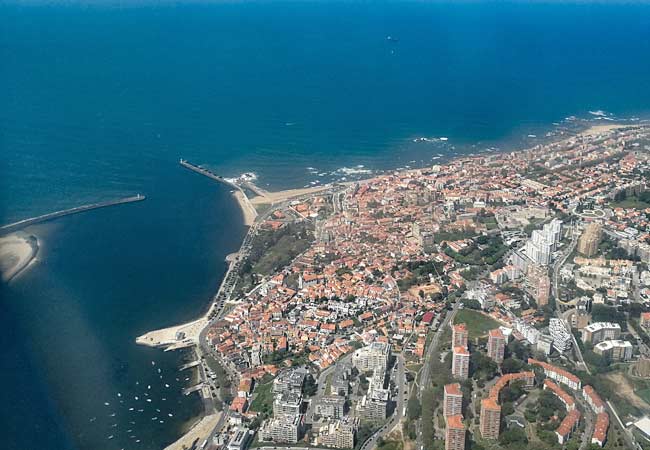
The Foz district as seen from the air, with the Douro River to the left of the image
The beaches of Foz
The western side of the Foz district faces the mighty Atlantic Ocean, with this coastline containing a series of small, sandy beaches protected from erosion by granite outcrops.
These beaches have coarse golden sands and are exposed to any sea breezes, but are great for a quick summertime trip when based in Porto. The sea waters are always chilly, only reaching around 19°C in the height of summer.
There are better beaches at Matosinhos, with softer sands and waves that are suitable for surfing. However, these are slightly further away, being connected by the Metro (and the 500 bus route).
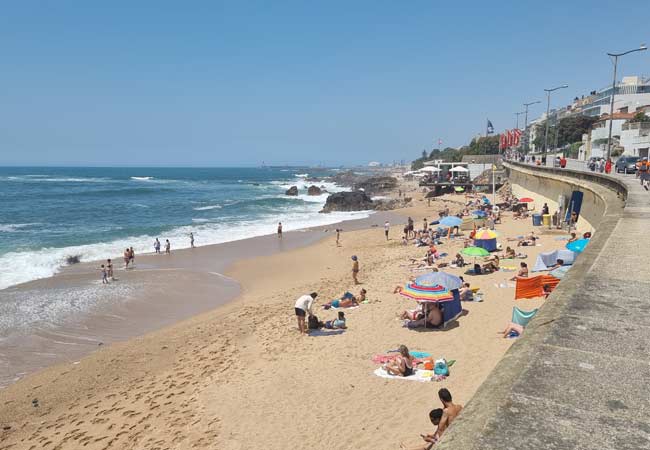
The Praia do Carneiro
The largest beach of the Foz district is the Praia do Carneiro, which sits at the mouth of the Douro River and is surrounded by concrete sea walls and sea defences. To the north are the Praia dos Ingleses, the Praia do Homem do Leme and the Praia de Gondarém, with these beaches having a much more scenic setting.
The beachside promenade connects all of the beaches of the Foz district, and it is often better to just wander along the coastline and find a section of beach that takes your fancy.
Warning: Due to the proximity of the Douro River, always check the water quality before swimming.
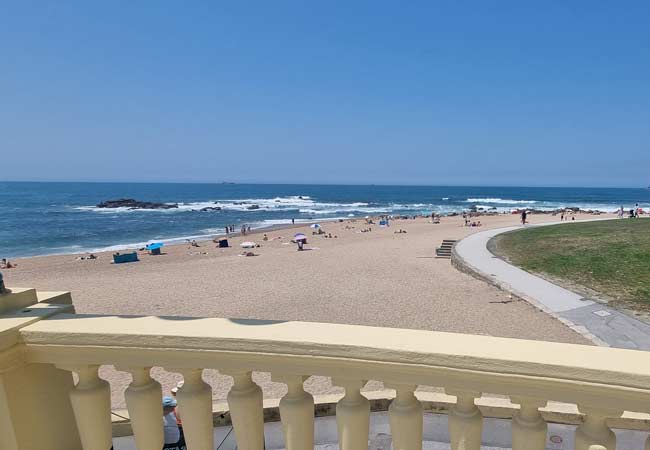
The Praia do Homem do Leme
Sights of Foz do Douro
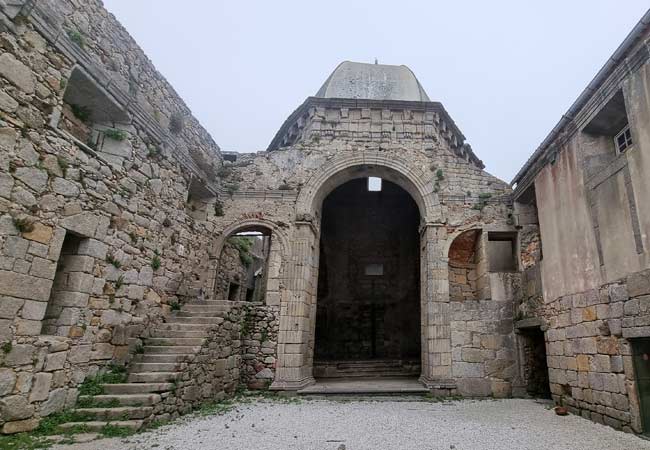
The Fortaleza de São João da Foz fort has protected the entrance to the Douro Estuary since its construction in 1647. The fort was built around a Gothic church, the São João da Foz do Douro, and the ruins of the church can be seen at the centre of the fort.
The Fortaleza de São João da Foz is free to enter and there are good views from the top of the battlements.
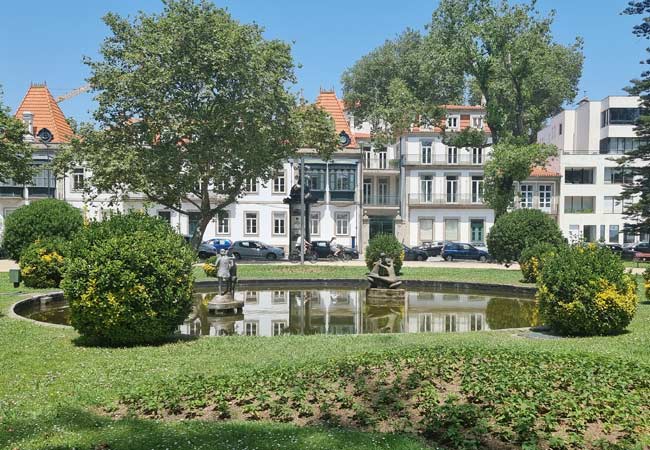
The Jardim do Passeio Alegre is a delightful park that sits on the banks of the Douro River. Found within the park is a mini-golf course (Clube Minigolfe do Porto), a great activity for children, and the Chalé Suisso, one of the oldest café-kiosks in Porto that is also a national monument.
The Pontão da Barra do Douro is the 400m-long sea wall that shelters the entrance to the Douro estuary. The shorter and older sea wall ends at the Farol de Felgueiras lighthouse. During stormy or winter weather, huge waves can break against the two sea walls and can be very dangerous.
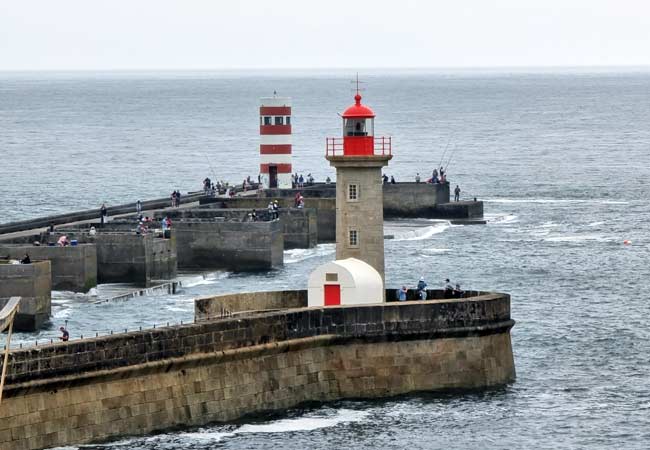
The Farol de Felgueiras, with the Pontão da Barra do Douro to the rear
The Farol de São Miguel-o-Anjo is the oldest lighthouse in Portugal that is still standing. The granite tower dates from 1527, but there has been a firelight on the rocky outcrop directing shipping since the Roman era. On the edge of the dock, next to the lighthouse, is the Marégrafo da Foz do Douro - a historic tidal gauge.
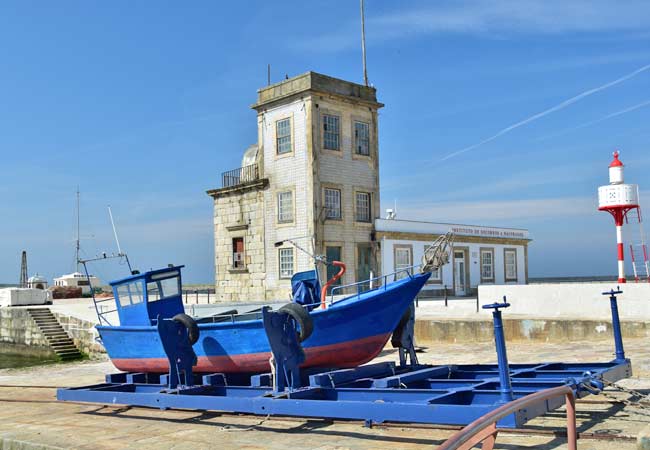
The ancient Farol de São Miguel-o-Anjo (left) next to the 19th-century customs tower
Inland from the river and sea is Foz Velha, an area of pretty cobbled streets and grand 19th-century villas constructed by wealthy merchants and upper-class families. The best of Foz Velha is seen to the north of the Jardim do Passeio Alegre and around the Rua do Padre Luís Cabral.
Travel to Foz do Douro
The Foz district is 5km from central Porto and is connected by the 500 bus route and the historic tram (Linha 1 route).
The bus provides cheaper and more frequent services, but the tram is a much more enjoyable tourist activity. Both the tram and bus follow the same route along the banks of the Douro River and are equally scenic.
The 500 bus service uses distinctive double-decker buses and departs from the São Bento bus stop, close to the São Bento train station. A single ticket purchased from the driver costs €2.50, or €1.40 if the Andante public transport ticket is used.
The Linha 1 tram departs from the São Francisco church, on the western side of the Ribeira district. A single tram ride costs €6.00, with a return costing €8.00.
The appeal of the tram means it is always more popular with tourists than the bus, and there can be very long queues. If it is busy, cross over the road to the 500 bus stop and ride the tram back.
Our most popular guides to Porto


Expert Insight: I'm Philip Giddings. I've been visiting Portugal since 2001 and now live here, in the Graça district of Lisbon, with my Portuguese wife Carla, whose family go back generations. Carla first brought me to Porto on an early trip, proud to show me her country, and 25 years on we still travel north almost every month to see her aunt and extended family, who live in the city.
I've been writing the independent guides at Porto-North-Portugal.com since 2010, and the site is now my full-time work. Living in Portugal, married into a Portuguese family, and walking Porto every month gives me a first-hand insight that many foreign blog writers simply don't have.
The site now has 174 guides on Porto and northern Portugal. It takes no payment from tourist boards, tour operators, or attractions for inclusion, and is funded by affiliate commissions on tour bookings, which are disclosed on every page that contains them. Every practical detail (ticket prices, opening hours, bus routes, time-slot policies) is checked against official sources and verified in person on the walks I make through the city. Read my full story here.