Porto-North-Portugal.com
The best independent guide to north Portugal
Porto-North-Portugal.com
The best independent guide to north Portugal
Vila do Conde, Portugal: an independent travel guide for 2026
When Vasco da Gama needed a ship for his second voyage to India, he had it built at Vila do Conde. So did the kings who launched Portugal's great fleets. For five centuries, the shipyards at the mouth of the Ave River turned out the wooden ships that carried Portugal to the corners of the globe, and the town still carries that salt in its bones.
Most visitors come here for the beaches, and it is easy to head straight for the sand and miss the history. But the reminders are everywhere.
A full-sized replica of a Nau, the great ocean-going sailing ship that carried Portuguese crews to India and Brazil, sits beside the river. Above it rises the vast Mosteiro de Santa Clara, once the largest monastery in Portugal, fed by a multi-arched aqueduct that carried water down to the hundreds of boat builders toiling on the banks below. At the river mouth, the small star-shaped Forte de São João once stood guard over those shipyards, warding off pirates and rival fleets.
Today, the real draw of the town is the coastline, and it is a favourite with the Portuguese. North of the river, a long ribbon of sandy beaches runs all the way to Póvoa de Varzim, broken by low rocks and backed by a quiet seafront promenade. South of the river, the pale dunes of Azurara stretch for miles. These are the beaches parents have brought their children to for generations, and those children have brought theirs.
Foreign visitors largely overlook Vila do Conde, and that is much of its appeal. What you find instead is a working Portuguese town: a fine old centre, a long stretch of coast, and a direct metro line that puts central Porto forty minutes away.
I have been travelling Portugal since 2001, and together with my Portuguese wife I have returned to Vila do Conde many times over the years, whether for an autumn surf at Azurara or a quiet beach day away from the crowds of Porto. This guide shares what we have learned, so you can plan a visit that does justice to one of the most overlooked towns on the Costa Verde.
Highlights of Vila do Conde
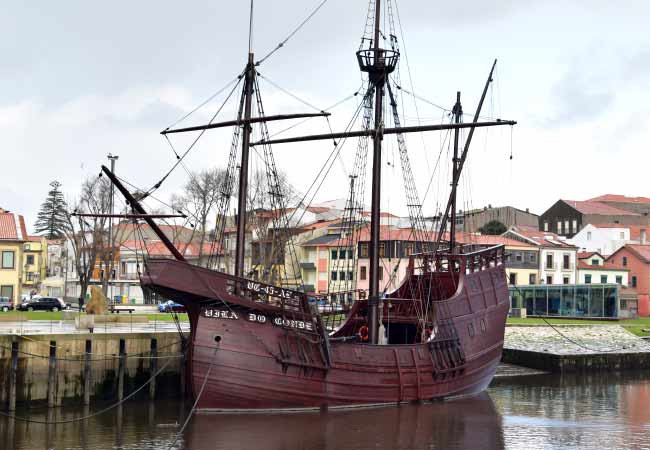
The Nau Quinhentista: A full-sized replica of a 16th-century ocean-going ship, built on the same riverside spot where Vila do Conde's shipyards turned out the originals until 1993. You can climb aboard and see how cramped the vessels really were, which makes Portugal's voyages to India and Brazil seem all the more improbable.
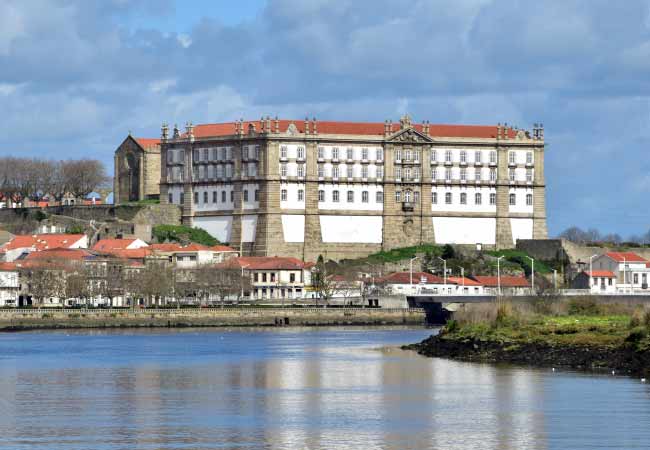
The Mosteiro de Santa Clara: The vast 18th-century monastery sits high above the Ave, founded in 1318 and rebuilt over four centuries into the building you see today. Its multi-arched aqueduct once ran four kilometres from a spring at Terroso to keep the nuns in fresh water, and broken stretches of it still march across the fields north of town.
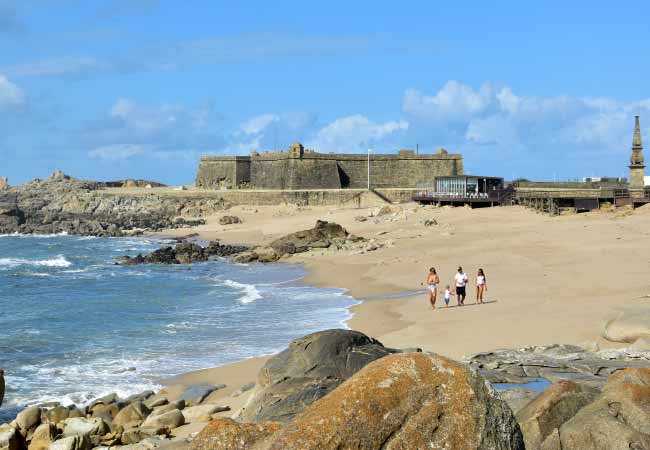
The beaches: North of the river, a long ribbon of sandy coves runs all the way to Póvoa de Varzim, broken by low rocks and backed by a quiet seafront promenade. South of the river, the pale dunes of Azurara stretch for miles, with finer sand and the bigger waves that draw surfers and bodyboarders.
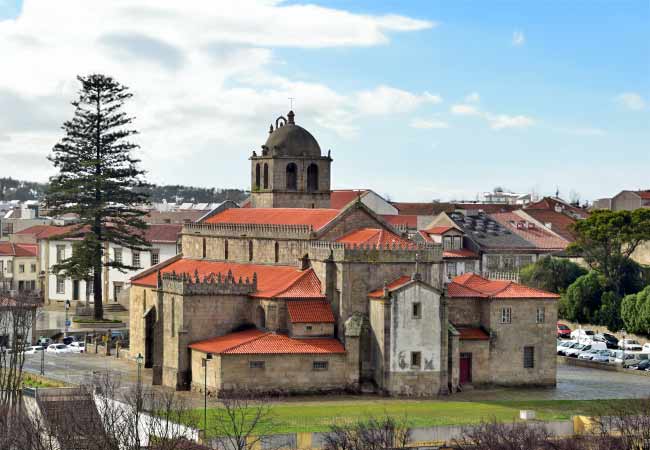
The old centre: A compact grid of cobbled lanes between the monastery and the river, anchored by the Praça da República and lined with the kind of small cafés and tiled shopfronts that have not yet been tidied up for tourists. It is the part of town where you understand that Vila do Conde is still a working place, not a postcard.
Vila do Conde for a beach day
The beaches are the easiest reason to come. From central Porto, the metro takes you here in forty minutes, and you step off into a small Portuguese town with sand at the end of the road.
The closest competition is Matosinhos, which sits nearer to Porto but is essentially a working port with a beach attached, and a good deal more hectic than what you find here. The other contenders along the line, Espinho, Aguda and Póvoa de Varzim, all have decent sand and easy trains, but none has an old centre to wander through when you have had enough sun. Vila do Conde does. A morning at the Mosteiro and the Nau, an afternoon on the beach, lunch somewhere in between. That is the day most visitors want.
I bring my two young nieces here, three and five, and it is the kind of beach where small children can run themselves into a happy exhaustion. A word of warning, though. Even on the hottest summer day, the Atlantic is still the Atlantic, and the waves can come in big. My two adore these waves, but I have to be in the chilly water with them.
Through the summer the main beaches are watched by lifeguards from June to September, and on weekends they fill with Portuguese families who have been coming here their whole lives. It is busy without ever feeling like a resort.
One thing worth knowing before you set off. The closest beach is a fifteen-minute walk from the main metro station, around 1.5 km, and most of it is along ordinary streets rather than seafront. Bring shoes you can walk in. The detail of which beaches are which, and which one suits what, comes later in this guide.
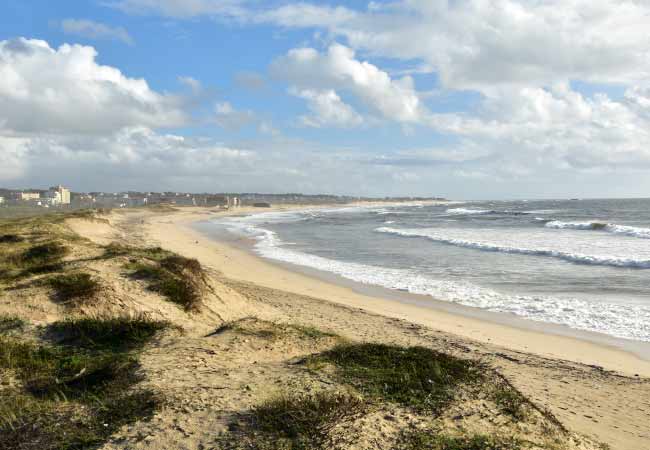
The Praia da Azurara, spacious during the summer and amazing for surfing in the autumn
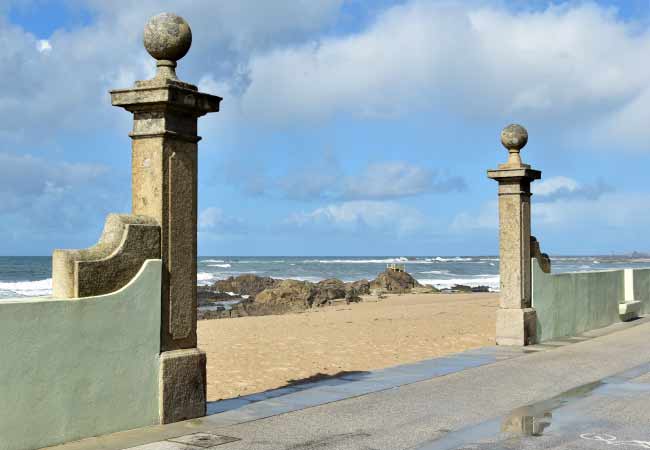
The entrance to the Praia Azul Sul
Vila do Conde as a day trip
Vila do Conde is well suited to a half day. The old centre is compact, the main sights cluster within a fifteen-minute walk of each other, and there is no single monument so vast that it eats your morning.
That is part of the appeal. The famous day trips from Porto, Guimarães, Braga, the Douro, all come with a checklist and a crowd. Vila do Conde does not. You can wander the cobbled lanes between the Mosteiro and the river, climb up to the chapel at Nossa Senhora da Guia for the view, board the Nau, and still have the afternoon free for the beach or a long lunch by the water. Few other foreign visitors will be doing the same.
Below is an interactive map of a suggested tour. Green pins mark the main sights. Yellow pins mark the best beaches. A full description of each sight follows later in this guide.
Sights: 1) Museu de Vila do Conde 2) Aqueduto de Santa Clara 3) Igreja e Convento da Encarnação 4) Convento de Santa Clara 5) Praça da República 6) Nau Quinhentista Ship 7) Antigo Convento do Carmo 8) Capela do Socorro 9) Praça da Alfândega 10) Capela de Nossa Senhora da Guia 11) Forte de João Baptista 12) Câmara Municipal 13) Igreja Matriz
Beaches: 1) Praia da Azurara 2) Praia das Caxinas 3) Praia da Olinda 4) Praia Azul Norte 5) Praia da Ladeira Norte
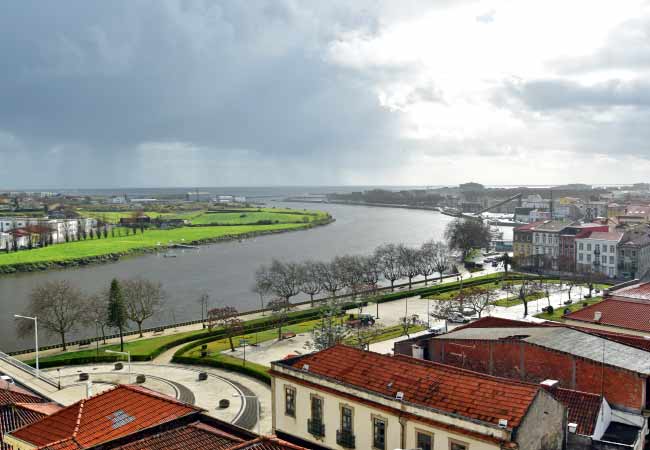
The Ave River flowing down to the ocean, viewed from the Mosteiro de Santa Clara.
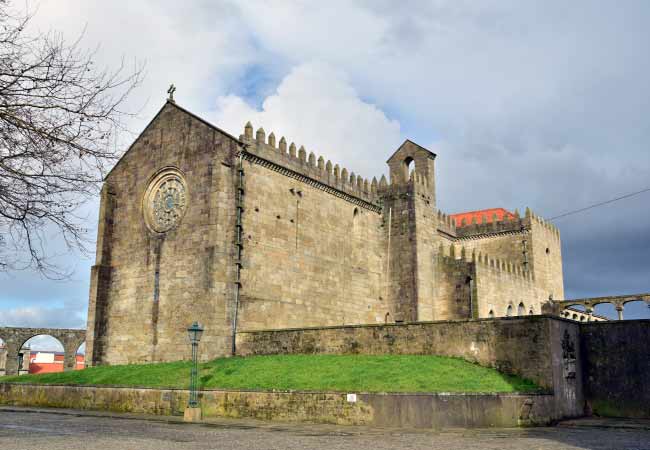
The medieval original section of the Mosteiro de Santa Clara.
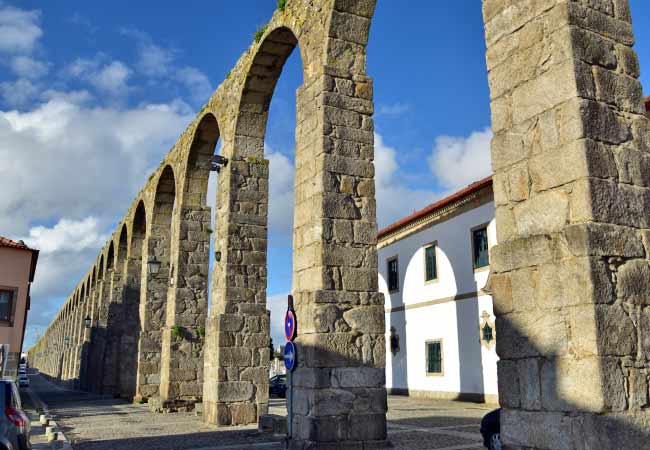
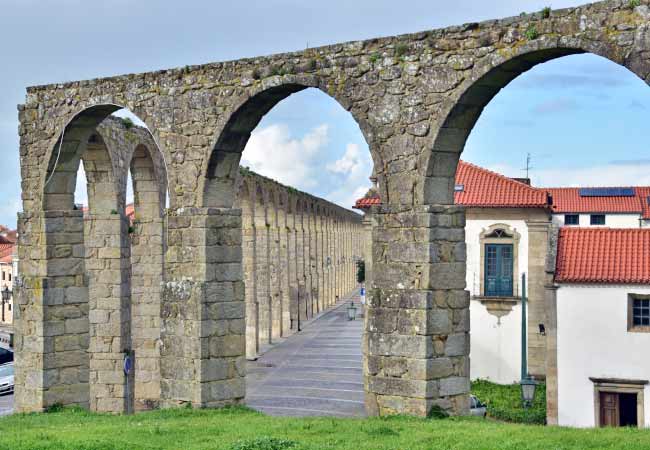
The many stone arches of the Aqueduto de Santa Clara, though the original aqueduct of 1626 never managed to bring water to the town.
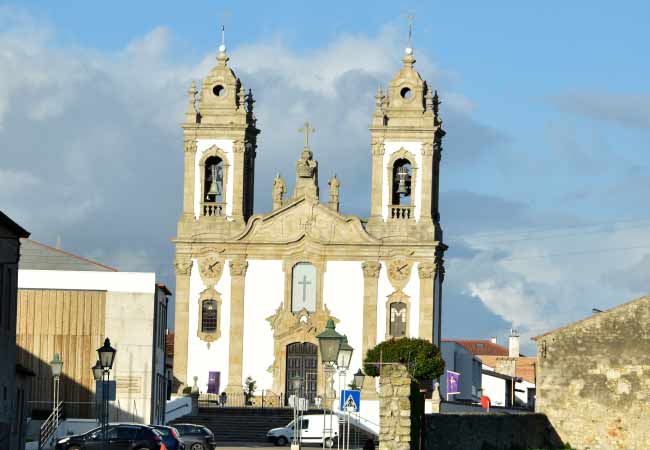
The pretty Igreja da Lapa with its ornate façade
A holiday to Vila do Conde
Vila do Conde suits a particular kind of holiday. Quiet mornings, long afternoons on the sand, dinner at a family-run place where the menu is in Portuguese and the fish was landed that morning. It works especially well for families with young children, and for older travellers who want a coast without the noise of a resort.
The town also makes a fine base for exploring the north. Porto is forty minutes away on the metro, with the airport on the same line. Braga and Viana do Castelo are both within easy reach by train or car, which means you can spend a week here and never repeat a day.
The Costa Verde is a different proposition from the Algarve. The sand is paler, the water colder, the cliffs lower, the towns less polished. There is more rain here than in the south, but the beach season runs from May to September, and on a warm August afternoon the long northern coast feels like the better-kept secret.
The map below shows the location of hotels and rental rooms in Vila do Conde; by altering the date to your holiday, the map will display current prices:
Travel from Porto to Vila do Conde
Vila do Conde sits at the northern end of Line B (the red line) of the Porto metro, which makes it one of the easiest day trips from the city. Trains run from Trindade, the main interchange station in central Porto, and the journey takes around an hour on the regular service. If you can, catch the B7 express metro service. It skips most of the smaller stops between Senhora da Hora and Vila do Conde and shaves a useful chunk off the journey.
A single ticket costs €3.25 from central Porto and is a Z6 fare. If you are planning a round trip from Porto to Vila do Conde and intend to take at least one more bus or metro ride within the same 24 hours, the Andante Tour 1 (€7.75) is usually the better deal. It covers all zones and saves you working out which zone you are crossing into.
There are two stops in Vila do Conde itself: Santa Clara, closer to the monastery, and Vila do Conde, the main station, closer to the town centre, the river and the Nau. The B7 express stops only at Vila do Conde, not Santa Clara. When heading back to Porto, I would not bother with the Santa Clara stop. Fewer trains stop there, the express skips it altogether, and the journey will be longer.
Buses also run from Porto if you would rather travel that way, but the metro is faster, more frequent, and more straightforward.
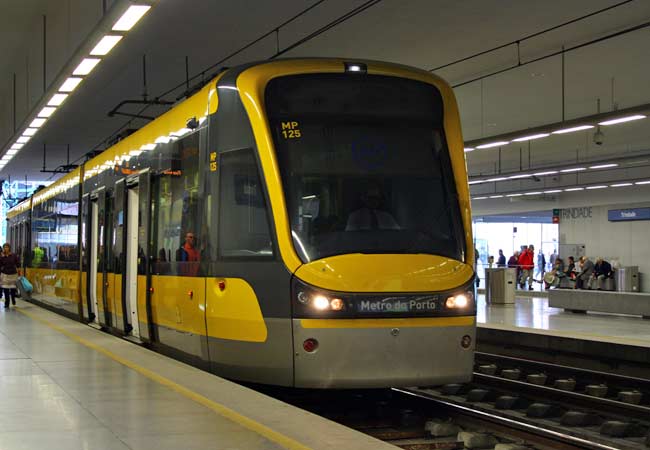
The express metro service to Póvoa de Varzim is the fastest way to Vila do Conde
Vila do Conde or Póvoa de Varzim?
The two towns sit side by side at the end of Line B, but they are not the same kind of place.
Póvoa de Varzim is the beach. The sand is wider, the seafront longer, and the town behind it is built around the summer trade. Most of the Portuguese you see on the metro heading north past Vila do Conde are going there. Behind the beach the town is modern and a little bland, and honestly there is not much to see.
Vila do Conde has beaches too, but they are not the reason to come. The reason is the old centre, the monastery, the Nau and the river. The beaches are a bonus to your trip.
For a day on the sand, stay on the metro and get off at Póvoa. For a town to explore that happens to have a beach, get off at Vila do Conde.
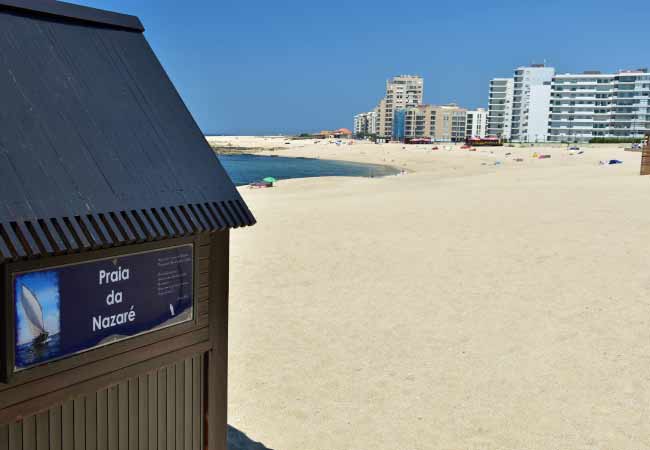
Póvoa de Varzim is all about the beach, and not much else
Sights of Vila do Conde
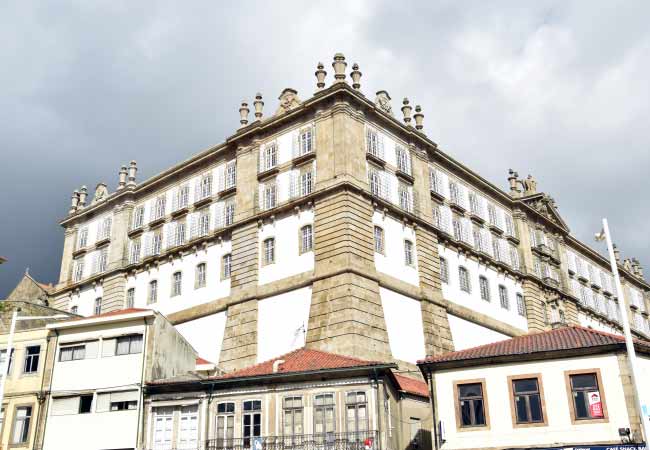
The Mosteiro de Santa Clara
You see the monastery before you reach the town. It sits high on a hill above the Ave, a long pale block of granite that dominates the skyline from every approach, and which, on a first visit, looks more like a fortress or a barracks than a place of worship.
The monastery owes its existence to a family quarrel more than to religion. King Dinis of Portugal openly favoured his illegitimate son over his legitimate heir. The queen took her son's side, and in 1314 she founded a Santa Clara monastery in Coimbra as a public statement of support for him. In response, the illegitimate son, Dom Afonso Sanches, built a Santa Clara monastery of his own in Vila do Conde, on lands his wife had brought to the marriage.
Of the original Gothic monastery, the church is what survives. The west front is plain granite topped with battlements and pierced by a single rose window. Inside are the tombs of the founders, recut in Manueline style, with Afonso in armour and Teresa in the habit of a Poor Clare.
The vast Neoclassical block you see from kilometres around is a much later addition. Commissioned in 1777, it was never properly finished, and for most of the twentieth century it served as a youth reformatory. It reopened in 2024 as The Lince Santa Clara, a five-star hotel, and the restoration is well done. Even if you are not staying, the bar and restaurants are open to the public, and a coffee in the cloisters is the easiest way to see the inside of the building.
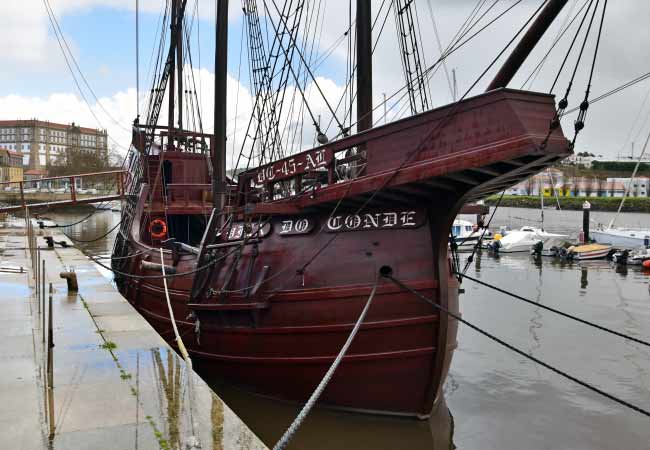
The Nau Quinhentista
Moored on the Ave River, in the spot where the shipyards of Vila do Conde once stood, the Nau Quinhentista is a full-scale replica of the kind of ship that carried Portuguese sailors into the Atlantic in the early 1500s. She looks the part of a 500-year-old vessel, but she was launched in 2007, built using the same techniques the town has practised for centuries.
She is a remarkably small ship for the work she was built to do. A crew of fifty or more lived aboard her for months at a time, sometimes for the better part of a year. She is 27.5 metres long, 7.7 metres across, and weighs around 300 tonnes, with three masts carrying square sails on the fore and main and a lateen sail on the mizzen at the back.
What sets the Nau apart from other museum ships I have visited is the way she has been brought to life inside. The crew is here, in the form of life-sized figures going about a working day at sea: the captain on the upper deck, the pilot bent over his charts, the apothecary among his jars of remedies that probably did more harm than good. Down in the hold you will find the cargo these ships carried back from the East: spices, silks, salt, alongside the meagre rations the crew had to live on at sea.
A word of warning if you are tall. These were working ships, not comfortable ones, and the ceilings below deck were built for sailors of a smaller century.
The Nau is part of the Alfândega Régia, the old Royal Customs House that now holds the Shipbuilding Museum across the street, and the two are best visited together. A combined ticket costs only two euros, and the museum on land gives useful context for what you see on the ship.
The Aqueduto de Santa Clara
The aqueduct that runs into the back of the Santa Clara monastery is the second longest in Portugal, and one of the more unexpected sights in a town this size. It was built to solve a simple problem. The nuns of Santa Clara had no reliable drinking water, and the nearest fresh spring was four kilometres away in the neighbouring parish of Terroso.
The first attempt, ordered in 1626, was a failure. The builders miscalculated the gradient, and the project was abandoned to ruin for the better part of a century. Work resumed in 1705, and the first water finally reached the cloister in 1714, nearly ninety years after the original order.
Local tradition gives the aqueduct 999 arches, which is the kind of round-and-mythical number you should treat as poetry rather than arithmetic. The real figure is lower, but the scale is still remarkable. The granite arches rise up to 20 metres high in places, and the longest surviving stretch runs photogenically through the rural fringes of the town before meeting the monastery walls.
Our most popular guides to Northern Portugal


Expert Insight: I'm Philip Giddings. I've been visiting Portugal since 2001 and now live here, in the Graça district of Lisbon, with my Portuguese wife Carla, whose family go back generations. Carla first brought me to Northern Portugal on an early trip, proud to show me her country, and 25 years on we still travel north almost every month to see her aunt and extended family, who live within the region.
I've been writing the independent guides at Porto-North-Portugal.com since 2010, and the site is now my full-time work. Living in Portugal, married into a Portuguese family, and visiting Northern Portugal every month gives me a first-hand insight that many foreign blog writers simply don't have.
The site now has 174 guides on north Portugal. It takes no payment from tourist boards, tour operators, or attractions for inclusion, and is funded by affiliate commissions on tour bookings, which are disclosed on every page that contains them. Every practical detail (ticket prices, opening hours, bus routes, time-slot policies) is checked against official sources and verified in person on the walks I make through the city. Read my full story here.