Porto-North-Portugal.com
The best independent guide to north Portugal
Porto-North-Portugal.com
The best independent guide to north Portugal
Guimarães or Braga? Which city for a day trip or holiday?
One city gave Portugal its first king. The other gave it its first cathedral. Both sit less than an hour from Porto, and choosing between them is one of the questions I am asked most often.
Guimarães is where Portugal began. The 10th-century castle on the hill above the old town was the birthplace of Afonso Henriques, the warrior king who carved a country out of the Iberian Peninsula in 1139, and the medieval streets below have changed remarkably little in the centuries since. It is small, walkable, and carries its history with the quiet confidence of a town that knows exactly what it is.
Braga, twenty-five kilometres to the north, is a different city in almost every way. It is the third-largest city in Portugal, a lively university town with a pedestrianised centre full of shops, cafés, and grand Baroque churches. Its Sé Cathedral is the oldest in the country, and on a hill just outside the city stands the magnificent Bom Jesus do Monte, with its theatrical staircase climbing towards the sky. Braga has more energy, more variety, and more to fill an evening than Guimarães sets out to offer.
If you only have a single day to give, I would send you to Guimarães first. The medieval character runs through every street of the small historic centre, from the cobbled lanes around the castle to the granite arches of the old plazas. Braga is a different proposition. It is a modern city with a handful of important historical sights set within it, rather than a historical town in its entirety, and that distinction matters when you only have a few hours. I have seen visitors try to combine the two into a single day, and I would urge you not to. Each deserves a full day of its own.
I have been exploring Portugal since 2001, and together with my Portuguese wife I have returned to both cities many times over the years, sometimes for an afternoon, sometimes for a long weekend, and often to show visiting friends and family the heart of the north. This guide draws on those decades of trips to help you decide which of the two cities suits the holiday you have in mind, and how to make the most of your time once you have chosen.
Related articles: Guimarães guide - Braga guide
So why Guimarães?
Guimarães is the most atmospheric of the historic cities of northern Portugal. Granite houses lean over the cobbled lanes, the plazas keep their medieval shape, and a castle older than the country itself watches over it all from the top of the hill.
At the heart of the old town sits the Largo da Oliveira, a plaza named for the olive tree at its centre and dominated by the Gothic monastery church of Nossa Senhora da Oliveira. From there, the arches of the Antiga Câmara Municipal lead through to the Praça de São Tiago, a second medieval square where I have spent more late afternoons over a coffee than I can count.
The oldest part of the city climbs the hill to the north, where you will find the Castelo de Guimarães. Built in the 10th century to defend against Moorish raids, it was the birthplace of Afonso Henriques and served as his royal court in the years that followed. Just below the castle is the Paço dos Duques de Bragança, a sober 15th-century palace whose staterooms are filled with period furniture, Flemish tapestries, and a sense of weight that suits the building well.
Guimarães is a maze of narrow streets and small plazas, and feels larger than it actually is. You can see all of the main sights in around four hours of walking, and many visitors extend the day by taking the cable car up Monte da Penha for views across the region. It is the kind of place where the history runs through every street, and where an unhurried walk tends to turn up something you did not expect.
Highlights of Guimarães
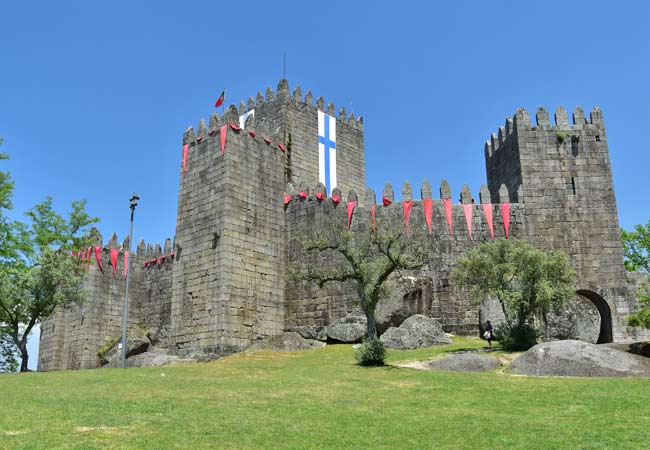
The Castelo de Guimarães. Built in the 10th century to defend against the Moors, the birthplace of King Afonso Henriques and the original seat of his royal court.
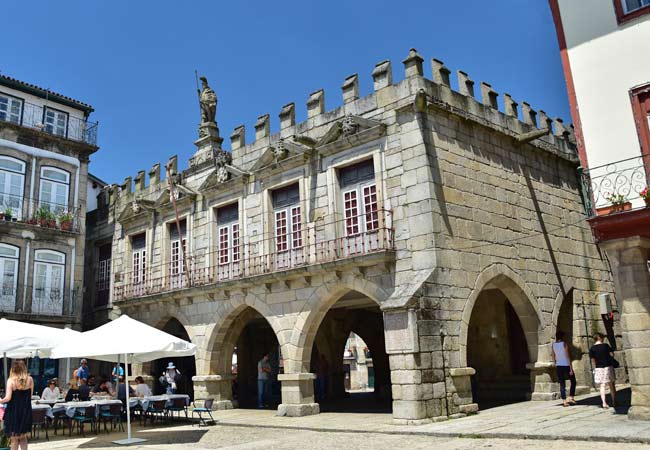
The Praça de São Tiago and Largo da Oliveira. The two linked medieval plazas at the heart of the old town, and the place in Guimarães where an afternoon disappears the fastest.
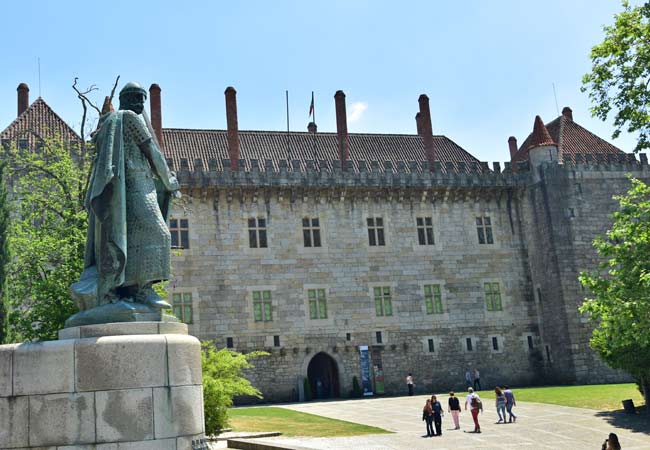
The Paço dos Duques de Bragança. An imposing 15th-century palace, the official northern residence of the Portuguese president and home to a notable collection of weaponry, ceramics, and Flemish tapestries.
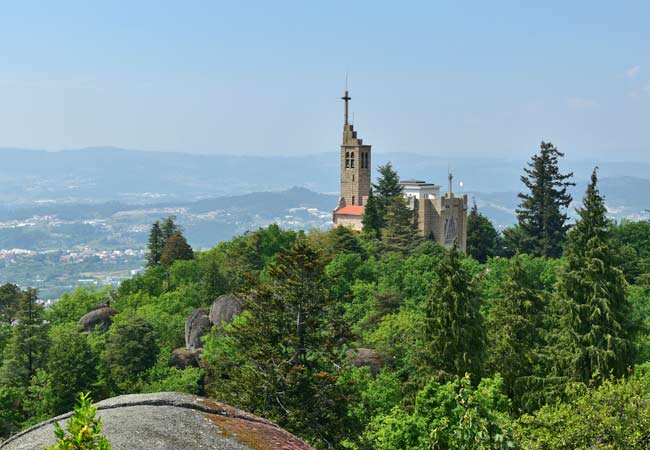
Monte da Penha. A forest-covered hill rising to 613 metres east of the city, with giant granite boulders, quiet footpaths, and panoramic views. A cable car connects Guimarães with the Santuário da Penha at the summit.
Group tours of Braga and Guimarães
A small group tour is the easiest way to see both cities in a day, with the driving, the timings, and the historical context all taken care of. We have been recommending GetYourGuide for seven years, and these are the tours we trust:
The links above are affiliate links. If you book through them, I earn a small commission at no cost to you.
I really appreciate it, as it helps me keep this website running.
What about Braga?
Guimarães may be my first recommendation, but Braga is a city I would never want a visitor to miss.
Braga is a city of a very different character. As the third-largest city in Portugal, it has the scale, energy, and variety that Guimarães cannot match. Where Guimarães is focused on its history and moves at a relaxed pace, Braga is restless and full of life, with far more shops, restaurants, and bars, and a student population that keeps the centre humming late into the evening.
The city centre is fully pedestrianised, and a morning's walk through it takes you past handsome plazas, broad shopping streets, and one fine Baroque church after another. The main draw in the historic centre is the Sé de Braga, the oldest cathedral in Portugal and a building thick with legend and centuries of layered architecture. Beyond the cathedral, you will find the pretty Jardim de Santa Bárbara, the aristocratic Palácio dos Biscainhos, and the grand Praça da República where the life of the city gathers.
Any day trip to Braga should also take in the Bom Jesus do Monte, five kilometres east of the centre. The church sits at the top of a hill and is reached either by a decorative Baroque stairway representing the ascent into heaven, or by the oldest water-powered funicular still in operation anywhere in the world. It is one of the great sights of northern Portugal, and on a clear day the views from the top stretch for miles.
Highlights of Braga
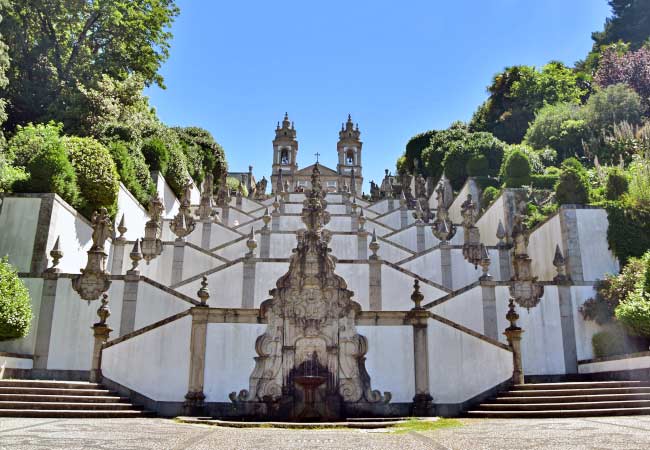
The Bom Jesus do Monte. A sacred pilgrimage church on a hilltop above the city, and one of the great Baroque sights of northern Portugal.
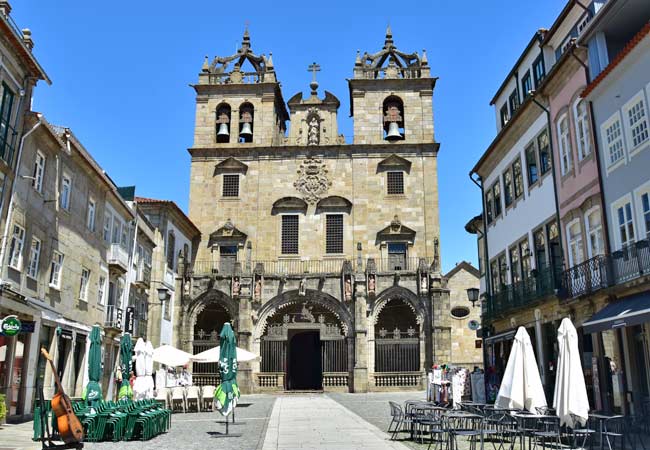
The Sé de Braga. The oldest cathedral in Portugal, central to the country's earliest history and layered with a thousand years of architecture.
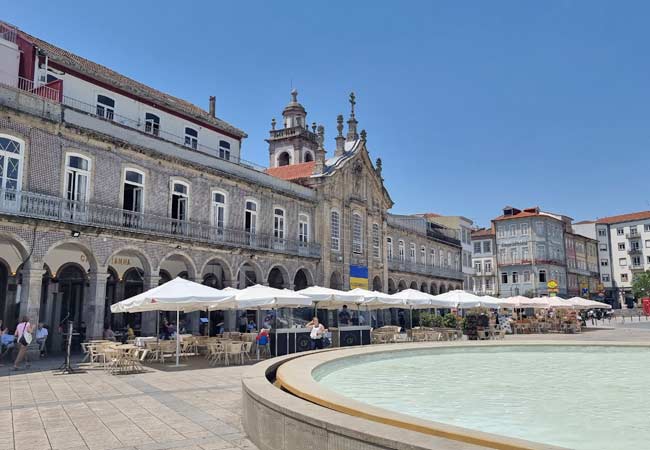
The Praça da República. A grand plaza at the heart of the city, where historic Braga meets the everyday life of its students, shoppers, and café crowds.
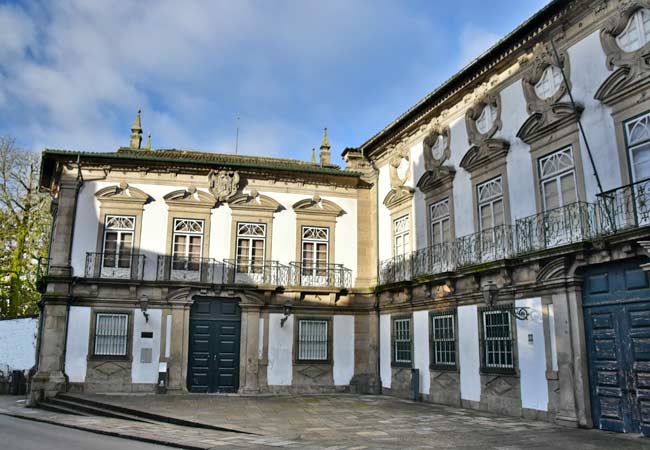
Palácio dos Biscainhos. A 17th-century aristocratic palace, home to one of the finest Baroque gardens in Portugal.
Our most popular guides to Northern Portugal


Expert Insight: I'm Philip Giddings. I've been visiting Portugal since 2001 and now live here, in the Graça district of Lisbon, with my Portuguese wife Carla, whose family go back generations. Carla first brought me to Northern Portugal on an early trip, proud to show me her country, and 25 years on we still travel north almost every month to see her aunt and extended family, who live within the region.
I've been writing the independent guides at Porto-North-Portugal.com since 2010, and the site is now my full-time work. Living in Portugal, married into a Portuguese family, and visiting Northern Portugal every month gives me a first-hand insight that many foreign blog writers simply don't have.
The site now has 174 guides on north Portugal. It takes no payment from tourist boards, tour operators, or attractions for inclusion, and is funded by affiliate commissions on tour bookings, which are disclosed on every page that contains them. Every practical detail (ticket prices, opening hours, bus routes, time-slot policies) is checked against official sources and verified in person on the walks I make through the city. Read my full story here.