Porto-North-Portugal.com
The best independent guide to Porto
Porto-North-Portugal.com
The best independent guide to Porto
3 days in Porto: My itinerary for 2026
Porto is really two cities, divided by the Douro and stitched together by the Dom Luís I bridge. The granite old town on one side, the port lodges of Vila Nova de Gaia on the other. Three days gives you time to know both, with a day to spare for the country beyond, and that third day is the one that turns a good trip into a memorable one.
The first two days take care of themselves. Porto is a city built for walking, and the headline sights sit close enough together that you can move between them without ever feeling rushed. You'll wander through the tiled grandeur of São Bento station, climb the Clérigos Tower, follow the cobbled lanes of the Ribeira down to the river, and cross the bridge for an afternoon in the port lodges on the other side. Add a sunset from the Serra do Pilar and a long dinner on the river, and two days are gone before you've noticed.
The third day is where the real choice lies, and the right answer depends on what kind of traveller you are. Guimarães, the birthplace of Portugal, is an hour away by train and gives you a medieval town that has barely changed in six centuries. Braga, equally close, takes you to the religious heart of the country and the Baroque theatre of Bom Jesus do Monte.
The Douro Valley is the slower, more scenic option, with terraced vineyards falling to the river and a tasting at a working quinta. In summer, when Porto's granite holds the heat, half an hour on the metro will put you on a wide Atlantic beach at Matosinhos or Espinho. None of these is the wrong choice. Some will simply suit you better than others, and I'll walk you through how to decide.
I've been visiting Portugal for twenty-five years and, together with my Portuguese wife, have spent countless long weekends in Porto. This guide shares the three-day route we send to friends, so you can make the most of your own time in the city.
Overview of my suggested 3-day itinerary
A three-day city break to Porto and the surrounding region
Day 1 morning: Begin in the ancient heart of Porto, where the cobbled lanes of the Ribeira and Sé districts climb away from the Douro. You will want time for the Sé Cathedral, the painted azulejo panels inside São Bento station, and a first crossing of the Dom Luís I bridge for the view back across the river.
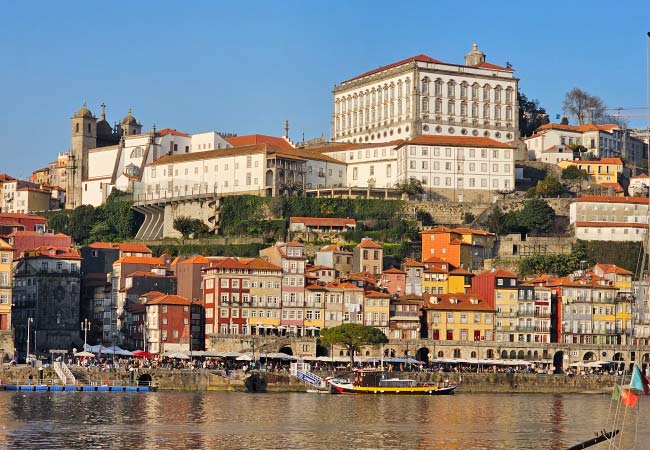
The colourful houses of the Ribeira neighbourhood line the banks of the Douro River.
Day 1 afternoon: Head into the busy shopping streets around Bolhão and its restored market, then continue up to the grand Avenida dos Aliados and the quieter Cordoaria district. This is where you will find the Igreja do Carmo and the Livraria Lello bookshop, two of the most photographed corners of the city.
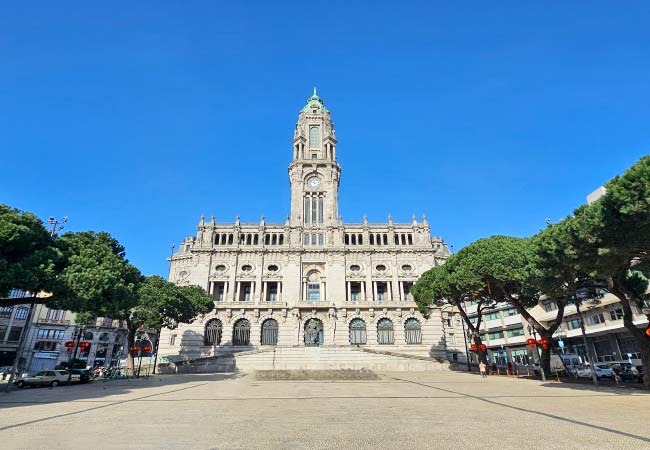
The grand Câmara Municipal standing at the top of the Aliados plaza
Day 1 evening: Return to the Ribeira waterfront for dinner at one of the restaurants lining the river, then walk up into the centre for a drink. The bars around Rua da Galeria de Paris are where the city goes out, and they stay lively well into the night.
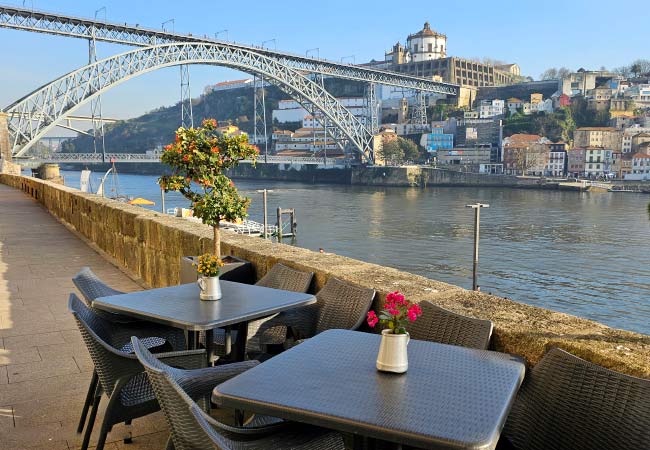
A romantic dinner overlooking the Ponte Luís I bridge
Day 2 morning: Cross the Dom Luís I bridge to Vila Nova de Gaia, the city on the southern bank where the port lodges have aged and bottled their wines for three centuries. A guided tour of one of the historic cellars, followed by a tasting, is the obvious way to spend the morning.
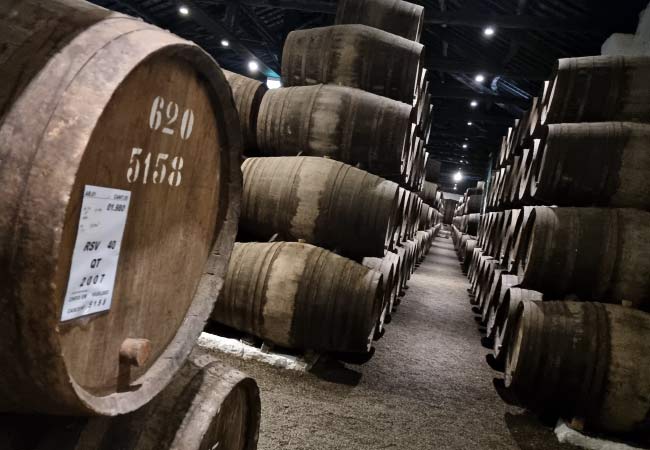
The vast cellars of Taylor's in Vila Nova de Gaia, where some of the port in the barrels has been ageing for decades.
Day 2 afternoon: Join one of the small boat cruises that sail the Douro, passing beneath the six bridges that stitch Porto to Gaia. Back on land, walk the Gaia waterfront and ride the cable car up to the Serra do Pilar, where the view opens out across the river to the old town.
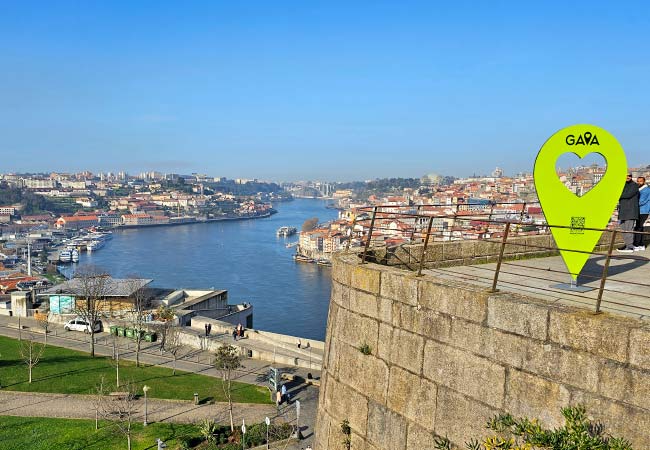
The view over Vila Nova de Gaia and the Douro River from the Miradouro da Serra do Pilar viewpoint. To my mind, the finest view in the city.
Day 2 evening: Stay on the Serra do Pilar terrace for sunset, when the granite of the old town turns gold and the river slows to a glow. For dinner, head to the Mercado Bom Sucesso, a covered food hall where you can eat well and sit among the locals rather than the tour groups.
***Day 3 - A day trip to:
Guimarães - An hour from Porto by train, this is the medieval birthplace of Portugal and the town where the first king was born. The historic centre has changed little in six centuries, and the castle on the hill above it is one of the most evocative in the country.
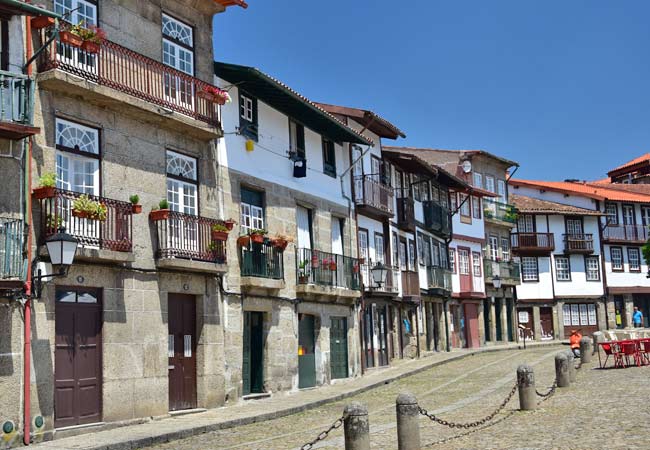
The historic centre of Guimarães
Braga - The religious capital of Portugal, set among Baroque churches and grand civic squares. The headline sight is Bom Jesus do Monte, just outside the town, where a zigzag staircase climbs the hillside towards the church above, lined with chapels, fountains, and stone saints.
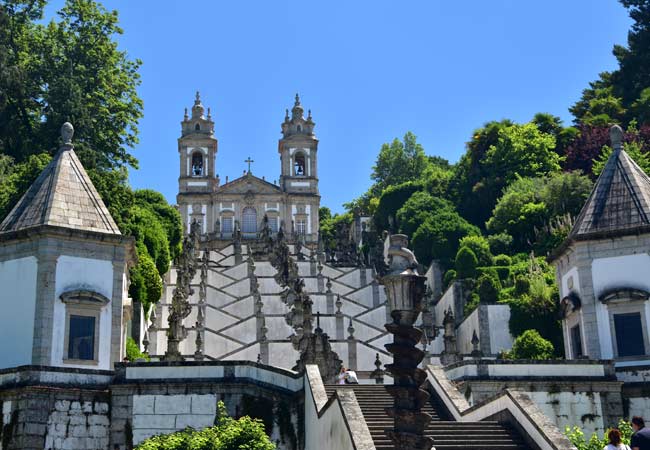
The Baroque staircase of Bom Jesus do Monte, just outside Braga.
Douro Valley - The slower, more scenic choice, where terraced vineyards fall steeply to a river that has carried the port trade for three hundred years. The historic Douro train will take you to Peso da Régua or Pinhão, and from either you can join a traditional rabelo boat and visit a working quinta for a tasting.
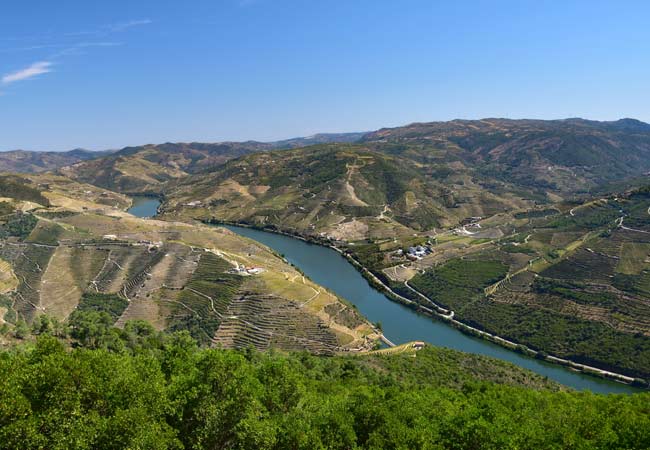
The Douro Valley from the Miradouro de São Leonardo de Galafura, one of my favourite viewpoints in the north of Portugal. The twisting road up to the summit is worth the detour.
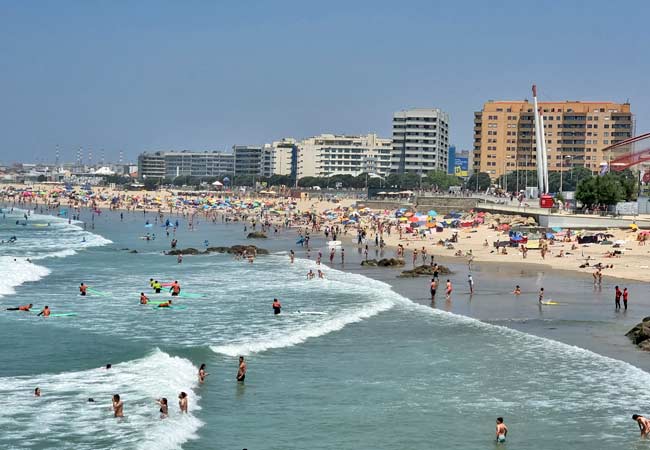
Matosinhos beach - In the heat of summer you may prefer to spend the final day on the beach, and Matosinhos is the closest to the city and the one most loved by the residents of Porto. A wide golden bay facing the chilly Atlantic, it is half an hour from the centre by metro and lined with some of the best grilled fish restaurants in the north.
How about a guided tour?
A guided tour is a hassle-free way to see Porto, and often the easiest way to fit in a day trip to the Douro, Guimarães or Braga without a long day on public transport. I have worked with GetYourGuide for the past eight years, and the highest-rated tours of Porto and the surrounding region include:
A three-day tour of just Porto
If this is your first visit to Porto, I would steer you towards a day trip for the third day rather than another day in the city. Guimarães, Braga, and the Douro all give you something the city itself cannot, and you will leave with a fuller picture of the north for it. That said, there are good reasons to stay put. You may have a longer trip and an extra day to fill, or you may simply prefer a slower pace that does not involve rushing around the north of Portugal. If that is you, the third day is best spent in the Foz district and along the Atlantic coastline that runs north from it.
Day 3 morning: Take the number 1 tram from the Ribeira along the Douro to Foz do Douro, where the river finally meets the ocean. Walk the riverside promenade, look around the small São João Baptista fort, and follow the sea wall out to its end for the long view back along the coast.
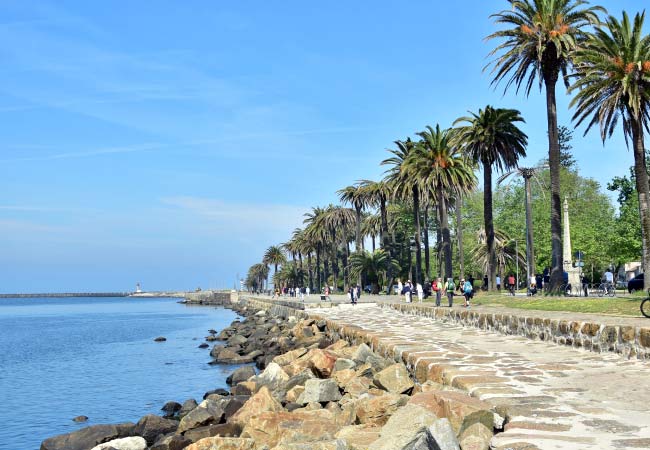
The riverside walks in the peaceful Foz district
Day 3 afternoon: A string of small beaches runs north from Foz do Douro to Matosinhos, linked by a scenic coastal footpath. The walk passes the Pérgola da Foz and the small clifftop fortress of the Castelo do Queijo, with plenty of cafés along the way. Afterwards, head inland to the Palácio de Cristal Gardens, a quiet pocket of green high above the river.
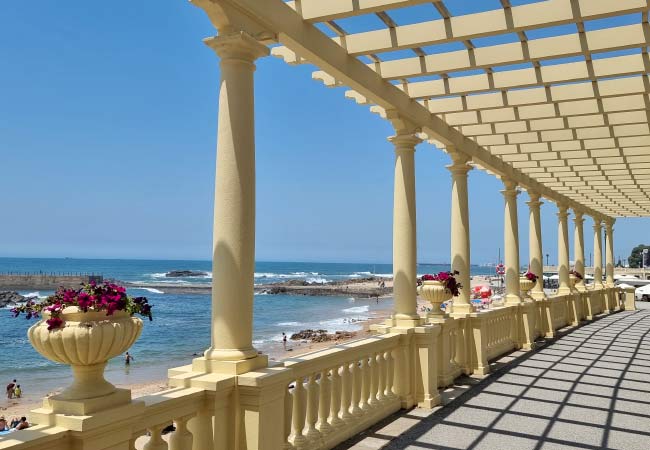
The Pérgola da Foz overlooking the Praia do Molhe beach and the Atlantic Ocean
Day 3 afternoon (alternative): If you would rather spend the afternoon out of the sun, the Museu de Arte Contemporânea de Serralves is the finest modern art collection in the north and sits within a beautiful park of its own. The Nacional Soares dos Reis Museum, closer to the centre, makes for a good second stop and covers Portuguese painting and sculpture from the medieval period onwards.
Day 3 evening: Watch the sunset from the Miradouro da Ponte da Arrábida, tucked inside the Palácio de Cristal Gardens, where the view stretches west along the river towards the ocean. For your final dinner, cross to the Vila Nova de Gaia waterfront, where the lights of Porto come on across the water and a glass of port is the natural way to end the trip.
The interactive map below brings together everything I have mentioned across the three days, with a suggested walking route for each day colour-coded. Zoom out to see the full set of points, including the day-trip destinations beyond the city.
Day 1 (yellow): 1) Sé Cathedral
2) São Bento Train Station
3) Ribeira neighbourhood
4) Ponte Luís I bridge
5) Igreja de São Francisco
6) Palácio da Bolsa
7) Mercado do Bolhão
8) Avenida dos Aliados
9) Torre dos Clérigos
10) Igreja do Carmo
11) Livraria Lello
Day 2 (green)
12) Caves Cálem
13) Caves Sandeman
14) Caves Ferreira
15) WOW Porto
16) Gaia cable car
17) Serra do Pilar viewpoint
18) Mercado Bom Sucesso
Day 3 (blue) 19) Guimarães
20) Braga
21) Peso da Régua
22) Pinhão
23) Foz district
24) Palácio de Cristal gardens and Ponte da Arrábida viewpoint
25) Arte Contemporânea de Serralves
26) Matosinhos
27) Dragão Stadium (FC Porto)
Useful guides for your three-day tour of Porto
The guides below go into greater depth on the places mentioned above, and you may find them useful as you plan each day:
A walking tour of Porto (for your first day in Porto)
Which port cellar in Vila Nova de Gaia should you visit? (for your second day)
Guimarães or Braga? (for your third day)
A guide to Guimarães (for your third day)
A guide to Braga (for your third day)
A tour of the Foz district (for your third day)
Porto’s best beaches (for your third day in the summer)
Have you booked your hotel yet?
Porto fills up quickly in peak season, and the better-located hotels in the Ribeira and around the Aliados are often the first to go. I would book sooner rather than later. Enter your dates in the search box below to check current prices and availability:
The following section details this 3-day tour in greater depth.
Day 1 - Exploring Central Porto
The first day is the one I would always spend on foot. Start down at the river in the Ribeira, then let the lanes pull you up through the old town to the monumental heart of the city around the Avenida dos Aliados. Below are the sights I would build the day around, in roughly the order you will come to them.
Avenue of the Allies (Avenida dos Aliados): The monumental heart of the city, a wide boulevard of marble and granite façades climbing to the Câmara Municipal and its 70-metre bell tower at the top. What I always find remarkable is that for all its grandeur, the plaza was only laid out in 1916, and much of the history it suggests is more recent than it pretends to be. It is still the place where the city gathers for its big moments, from football celebrations to New Year's Eve.
The Câmara Municipal and the Avenida dos Aliados
Clérigos Tower (Torre dos Clérigos): The slender Baroque tower on the highest point of the old town, and the first sight I would point a first-time visitor towards. The 240-step climb up the narrow stone staircase is steeper than it looks on paper, but the view from the top is the best in the city: the rooftops of the old town, the Douro winding below, and the port lodges of Gaia rising on the far bank.
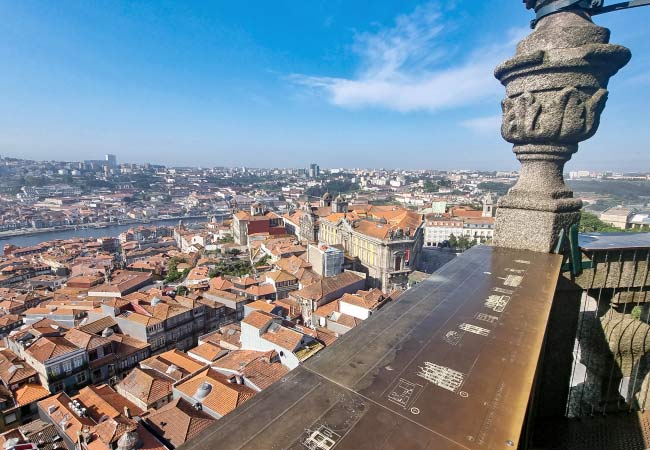
The view from the top of the Torre dos Clérigos tower
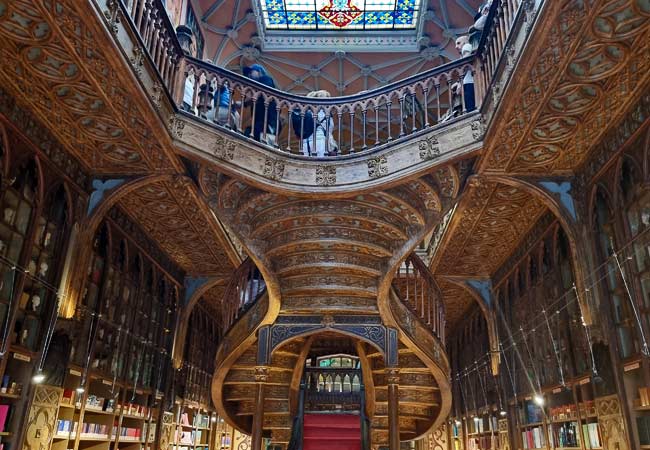
Lello bookshop (Livraria Lello): One of the oldest bookshops in Portugal and, thanks to its carved wooden staircase and stained-glass ceiling, one of the most photographed interiors in the country. J.K. Rowling lived in Porto in the early 1990s and the shop is widely accepted to have inspired parts of the Hogwarts library. Book a timed ticket in advance, otherwise you will queue for an hour for a shop you can walk through in ten minutes.
Saint Ildefonso Church: A small 18th-century church near the top of the Aliados whose façade is covered in more than 11,000 hand-painted blue azulejo tiles, added in 1932 by the artist Jorge Colaço. If the tilework here draws you in, leave time for São Bento station too; Colaço's work in the entrance hall there is, to my mind, the finest piece of azulejo art in the country.
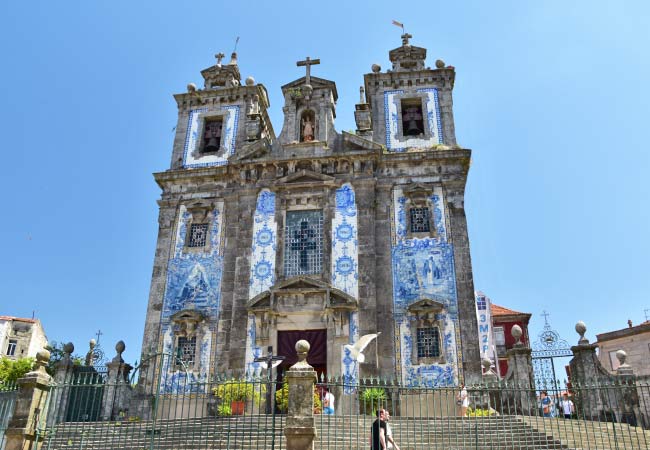
The façade of Santo Ildefonso, covered in more than 11,000 hand-painted azulejo tiles
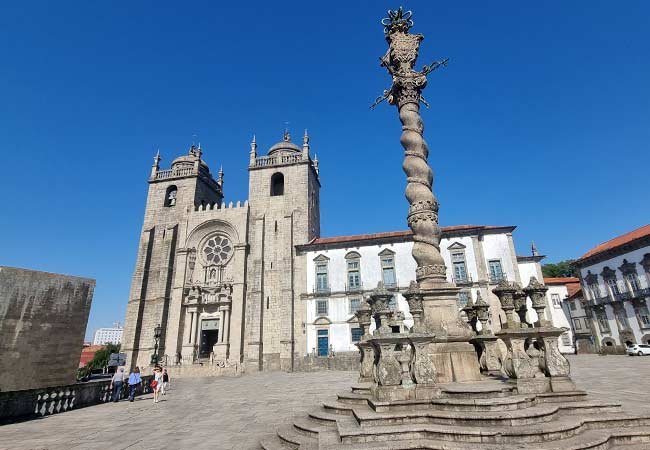
Porto Cathedral (Sé do Porto): The fortified cathedral has stood at the religious heart of the city since the 12th century, and the square in front of it was once the main trading square of medieval Porto. The Romanesque interior is austere, but the 14th-century cloister beside it, lined with blue azulejo panels, is one of the quiet highlights of the old town. The terrace outside is also one of the best free viewpoints in the city.
Stock Exchange Palace (Palácio da Bolsa): The grand Neoclassical complex was built in 1830 by Porto's Commercial Association to attract foreign investors to the city, and the interiors are visited by guided tour only. The headline room is the Salão Árabe, an extraordinary Moorish revival hall that took eighteen years to decorate and was designed to impress visiting trade delegations. It still does.
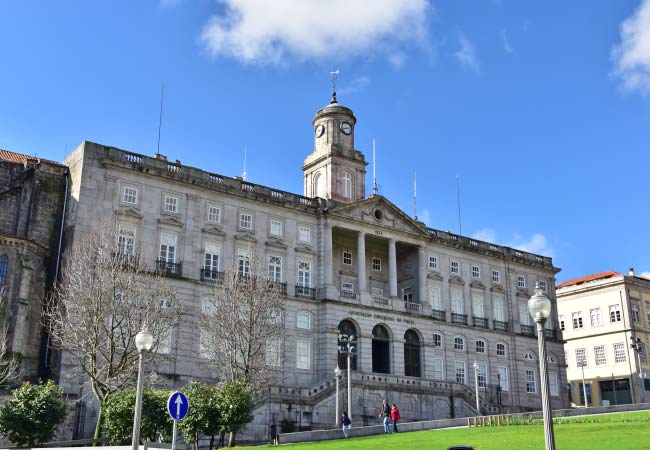
The Palácio da Bolsa, the city's 19th-century stock exchange.
Evening: Dine in the Ribeira: The narrow streets of the Ribeira are where I would always end the first day. The waterfront restaurants are touristy in places, but the lanes just behind them hide some of the best small kitchens in Porto. Find one of those, then take a glass of port out onto the river afterwards and watch the lights come on across the water in Gaia. It is the right way to close a first day in the city.
Day 2 - Vila Nova de Gaia
The country may take its name from Porto, but the fortune that built the city was made on the opposite bank. Vila Nova de Gaia sits directly across the Douro from the Ribeira, and it is here, in the long, low cellars lining the Avenida de Diogo Leite, that port wine has been aged, blended, and bottled for the past three centuries. The grapes are grown a hundred miles upriver in the Douro Valley, but the trade itself was built here, and a tour of one of the cellars is, for me, the sight that no first-time visitor should miss.
The tours themselves are surprisingly affordable, with the price reflecting the quantity and quality of what you taste. The cheapest start at around €10 for two glasses of standard port, while the more serious tastings, with vintage and aged tawny ports, climb from there. Each cellar runs tours in several languages, and most last around 45 minutes. If you have the time and the inclination, I would join two over the course of the day, since the styles and the stories vary more than you might think between houses. If you have time for only one, I would point you towards Ferreira, the only one of the great port houses still in Portuguese ownership, and the one whose story is most closely tied to the city itself.
For a fuller breakdown of which cellar suits which kind of visitor, see our guide to the port cellars of Vila Nova de Gaia.
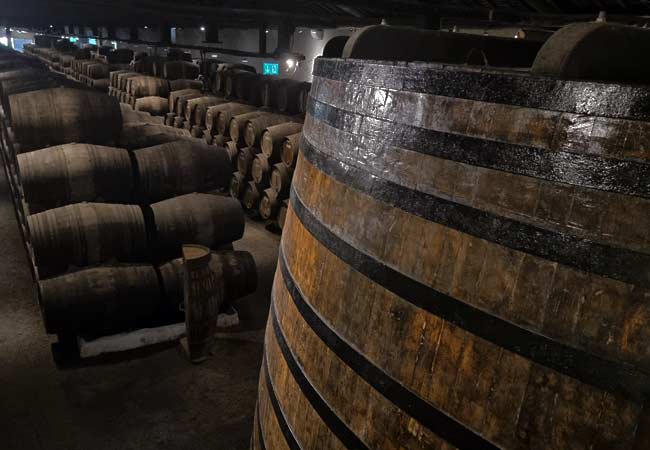
The wooden tanks where the ruby ports are stored for three years
Other highlights of Vila Nova de Gaia:
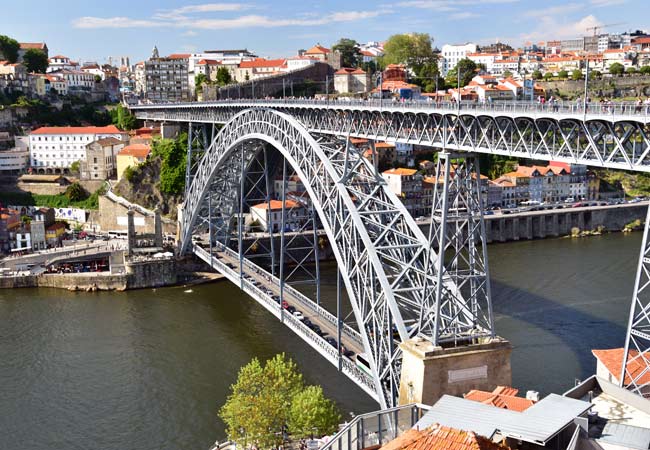
Ponte Luís I Bridge: The double-deck iron bridge that connects Porto to Gaia, designed by Théophile Seyrig, a former partner of Gustave Eiffel, and completed in 1886. You can cross at both levels, but it is the upper deck I would steer you towards. The walk across the top, shared with the metro and a thin pedestrian path, gives you what I think is the single best view in the city, with the Ribeira tumbling down to the river on one side and the port lodges of Gaia rising on the other.
Mosteiro da Serra do Pilar: The whitewashed 16th-century monastery that crowns the cliff above Gaia, reached either by the Teleférico de Gaia from the riverside or, if you prefer to walk, by the upper deck of the bridge. The circular cloister is one of only two of its kind in the world, but the real reason to come up is the terrace beside it, where the view back across the Douro to the old town is, to my mind, the finest in Porto. I would time it for late afternoon, when the granite of the Ribeira turns gold in the lower sun.
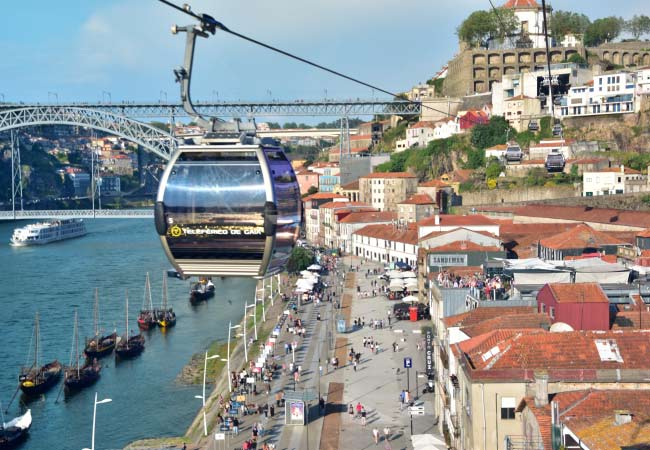
The waterfront of Vila Nova de Gaia
Cruise the River Douro: A short river cruise is the easy way to see the six bridges that stitch Porto to Gaia, and to look back at both cities from the water. The standard route is the Six Bridges Cruise, which lasts around 50 minutes and runs throughout the day from both banks. It is touristy, I will not pretend otherwise, but the perspective you gain on the city from the middle of the Douro is one you cannot get any other way.
Day 3: Day trip to Guimarães, Braga or Espinho beach
The third day is the one I keep coming back to in this guide because the choice you make matters. Each option gives you a very different kind of day, and the right answer depends as much on the weather and your appetite for travel as on the place itself. All three are reached by train from São Bento, which makes them straightforward to organise: no car needed, no transfers, and you are back in Porto in time for dinner.
Day trip to Guimarães: Guimarães is the place where Portugal as a country began. It was the first capital, in the 12th century, and the birthplace of Afonso Henriques, the first king. The medieval castle still stands on the hill above the town, and the inscription on the city walls, "Aqui nasceu Portugal" (Portugal was born here), is something the locals take seriously. Below the castle, the historic centre is a UNESCO-listed grid of cobbled lanes, granite arcades, and quiet squares, which I think rewards a slow afternoon as much as a morning of sightseeing. If you have the legs for it, the cable car up to Penha Hill is the right way to end the day.
The historic centre of Guimarães, a UNESCO-listed grid of granite arcades and cobbled lanes that has changed little in six centuries.
Day trip to Braga: Braga is the religious capital of Portugal and one of the oldest Christian cities in the country, with roots going back to Roman Bracara Augusta. The compact historic centre is dense with Baroque churches, ornate civic buildings, and tiled façades, and it carries itself with a confidence that comes from being a city of bishops rather than merchants.
The headline sight is just outside the town: Bom Jesus do Monte, a hilltop sanctuary reached by an elaborate zigzag staircase that climbs the wooded slope past chapels, fountains, and stone saints, and is meant to represent the soul's ascent to heaven. It is, to my mind, the finest piece of Baroque theatre in the north of Portugal, and worth the trip on its own.
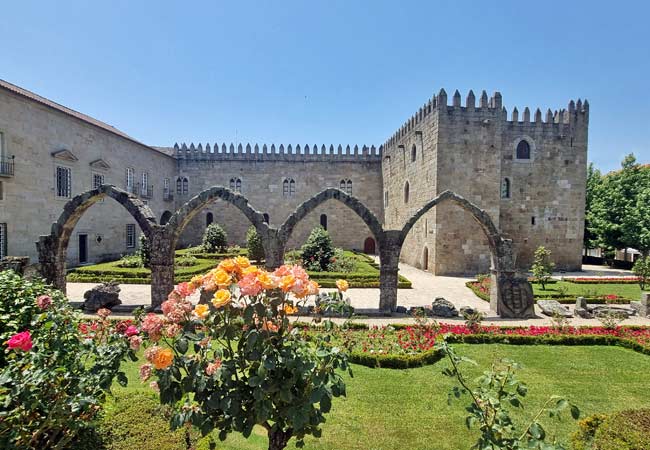
Braga is a delightful city
Day trip to Espinho beach: Espinho is the easiest beach escape from Porto, twenty minutes south by train, and the answer for a hot summer's day when the granite of the old town starts to feel like an oven. The town runs along a 17-kilometre stretch of golden Atlantic sand, exposed to a westerly swell that brings reliable surf and a cooling breeze even at the height of August.
The centre itself is a typical Portuguese resort town, with a small fishing community that still pulls its colourful boats up onto the beach, the largest casino in the north of Portugal, and a row of seafood restaurants where the catch arrives a few hours after it leaves the water. I would come for the beach and stay for the fish.
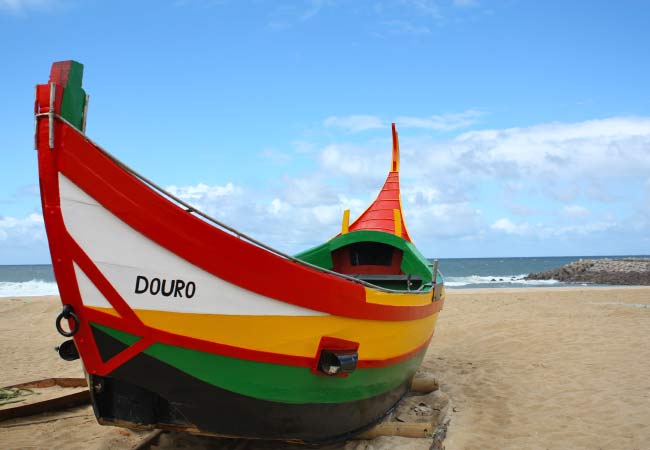
A colourful fishing boat on the vast beach of Espinho
Our most popular guides to Porto


Expert Insight: I'm Philip Giddings. I've been visiting Portugal since 2001 and now live here, in the Graça district of Lisbon, with my Portuguese wife Carla, whose family go back generations. Carla first brought me to Porto on an early trip, proud to show me her country, and 25 years on we still travel north almost every month to see her aunt and extended family, who live in the city.
I've been writing the independent guides at Porto-North-Portugal.com since 2010, and the site is now my full-time work. Living in Portugal, married into a Portuguese family, and walking Porto every month gives me a first-hand insight that many foreign blog writers simply don't have.
The site now has 174 guides on Porto and northern Portugal. It takes no payment from tourist boards, tour operators, or attractions for inclusion, and is funded by affiliate commissions on tour bookings, which are disclosed on every page that contains them. Every practical detail (ticket prices, opening hours, bus routes, time-slot policies) is checked against official sources and verified in person on the walks I make through the city. Read my full story here.